Mystery and allure shroud the ancient triskelion symbol. This enigmatic emblem, prevalent in Celtic and other ancient cultures, holds a fascinating journey through history and meaning. Embark on an exploration of the symbol’s origin, its evolution, and the profound it carries across different cultures.
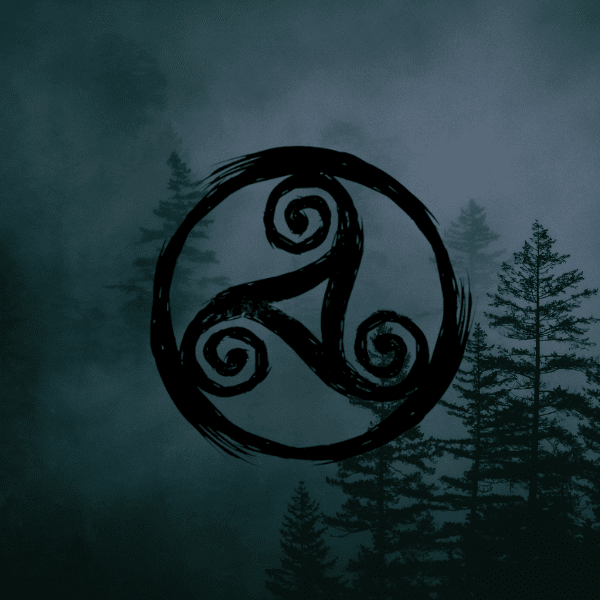
Mystery and allure shroud the ancient Triskelion symbol. This enigmatic emblem, prevalent in Celtic and other ancient cultures, holds a fascinating journey through history and meaning. Embark on an exploration of this symbol origin, its evolution, and the profound symbolism it carries across different cultures—both old and new.
The Origin and Evolution
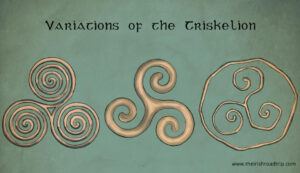
The term triskelion, derived from the Greek triskeles, meaning “three-legged,” dates back to ancient civilizations. It often appears as a spiral triskele, with three symmetrical spirals emanating from a central point. The oldest known triskelion traces back to the Neolithic era, gracing the entrance of Newgrange, Ireland, an ancient monumental structure. Over time, this symbol took root in various cultures, notably the Celtic spiral triskele, where it transformed into the Celtic triskele.
Is the triskelion Irish or Scottish? Newgrange, located in Ireland, indicates a strong Celtic origin, though versions of the Germanic triskelion also appear in Norse contexts.
Meaning Through Time
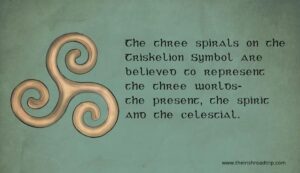
Initially, the this symbol meaning centered on notions of movement and progress. The three spirals—or legs—in the three-legged triskelion suggest a dynamic energy, indicative of life’s constant motion. In Celtic culture, it assumed deeper connotations. The Celtic triskele often represented the triadic nature of life: birth, death, rebirth; past, present, future; and land, sea, sky. This symbolism imbued it with spiritual significance, intertwining it with the cycle of life and nature’s rhythms.
Triskelion in Paganism
In pagan traditions, this symbol holds a revered place. It epitomizes the tripartite divisions that pagans see in the world around them. The triskele, in this context, becomes a symbol of the threefold nature of the goddess—maiden, mother, and crone—reflecting the sacred feminine principle. Thus, is the triskelion a pagan symbol? Yes, deeply so—especially within Celtic spiritual frameworks.
Triskelion vs. Triskele
Often used interchangeably, these two share similar roots but bear nuanced differences:
- Triskelion refers to a broader range of three-legged symbols across various cultures.
- Triskele or Celtic triskele typically refers specifically to the Celtic variation, known for its distinct spiral design and spiritual connotations.
Celtic or Norse?
The debate over this symbol’s origins often stirs curiosity. Did the Vikings use the triskelion? Indeed, Norse artifacts include variants. However, the earliest versions emerged in the Celtic world. This dual presence underscores the symbol’s universal appeal.
Spotlight: Coventum’s Charm
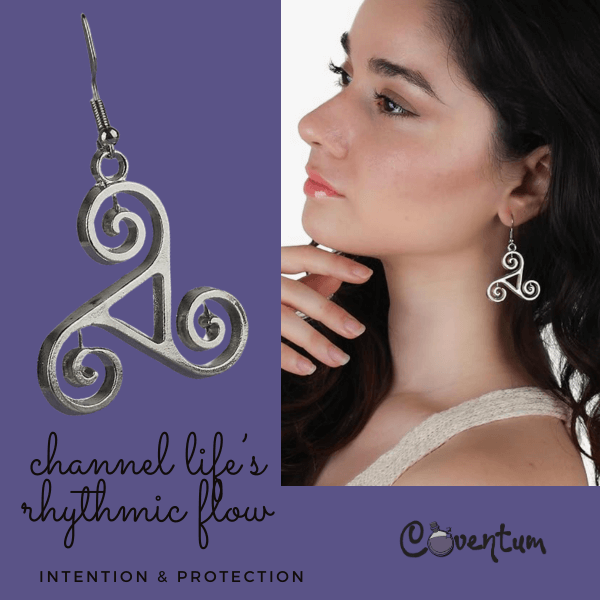
Elevate your style with our Coventum Triskele Earring—a sublime blend of Celtic heritage and contemporary flair. Whether you’re into sacred geometry or signature accessories, this earring channels intention, protection, and life’s rhythmic flow.
Embrace your strength. Wear your myth. Shop today!
Why the Triskelion Matters
The meaning of the triskelion symbol goes beyond aesthetics—it embodies life’s cycles, transformation, and spiritual growth. From its earliest presence in Neolithic structures to modern-day adornments, it remains a symbol of continuity, resilience, and cosmic alignment.