There is a quiet difference between going in circles and coming around again. A circle will return you, with almost ceremonial politeness, to the same door you left. A spiral looks, at a glance, like the same loyalty. Then you notice that the door has moved. People have been carving this shape, and watching it unfurl, for a very long time — not because they agreed on a single meaning, but because it holds two truths at once: something returns, and something has changed.
A Curve, Not a Loop, Not a Maze
A spiral winds around a point while its distance from that point keeps changing. It may open or tighten. What it does not do is close. A circle repeats itself exactly. A unicursal labyrinth reaches a center by folding back on itself; the path is single, but it switches direction. A maze offers choices and dead ends. If you have ever followed a “spiral” that suddenly reversed, you were probably in a labyrinth, being given a more complicated education than you requested.
Tarot has a concise version of the same thought. The Major Arcana is often read as the Fool’s Journey: it begins with The Fool and ends with The World. When the Fool steps out again, the deck has not been rewound. The second beginning is not the first. That is a spiral, not a circle.
Carved, Worn, and Watched
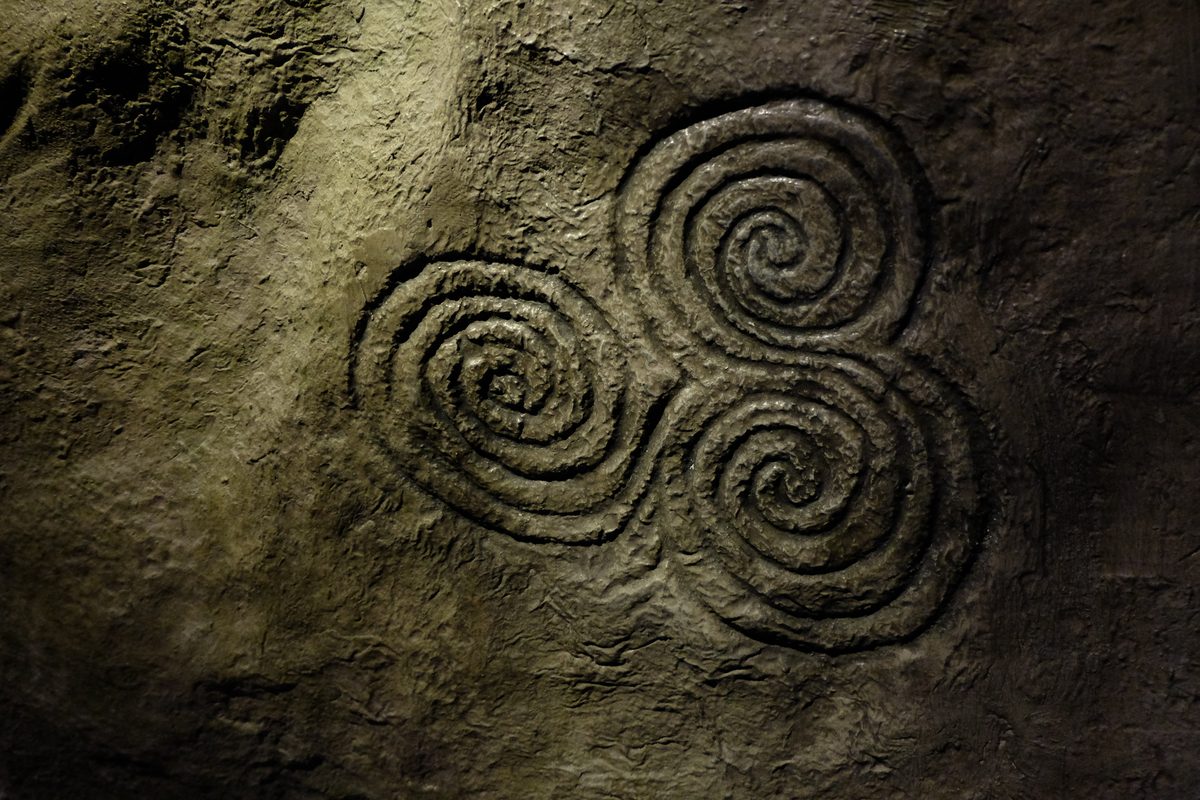
One of the most famous spirals in Europe is older than the Celtic world that later claimed a family resemblance. At Newgrange, in Ireland’s Boyne Valley, a passage tomb was built around 3200 BCE. The Office of Public Works describes the entrance stone as bearing a large triple spiral; another appears in the passage. Later Celtic art took up related three-armed designs, often called a triskele or triskelion. The Newgrange carving, though, is Neolithic: it predates Celtic Ireland by roughly two and a half millennia. The stones were not waiting to become a logo for a later people.
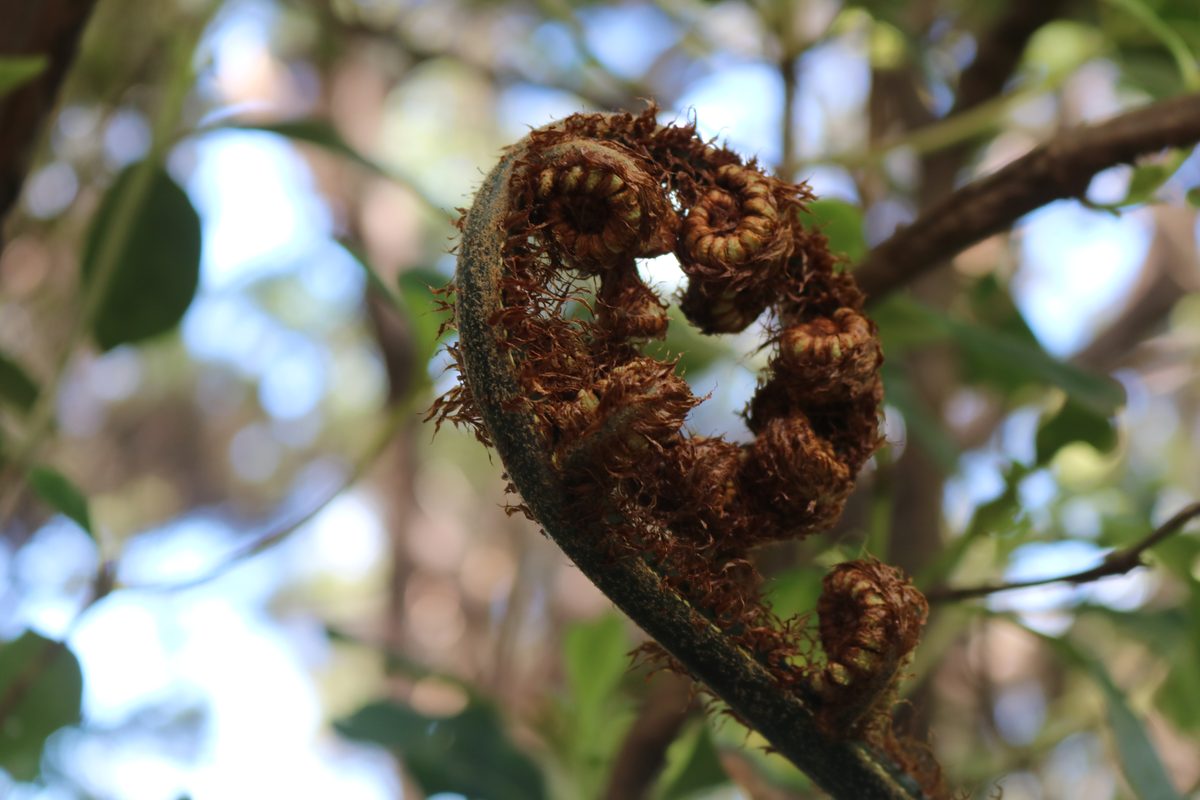
The same instinct appears far from the Boyne. In Māori art, the koru is based on an unfurling fern frond. Te Ara, the Encyclopedia of New Zealand, describes its circular movement as perpetual, and its inward coil as a return to the point of origin: life that both changes and stays the same. In the American Southwest, Ancestral Pueblo communities carved spirals into rock as a way of watching the sky. At Fajada Butte in Chaco Culture National Historical Park, and at Holly House at Hovenweep, spiral petroglyphs meet shafts of sunlight at solstices and equinoxes. The National Park Service treats them as tools for keeping time. A spiral, here, is not an abstract emblem of “energy.” It is a way of noticing when the year turns.
These traditions do not agree on a single caption, and they do not have to.
A Shape Nature Keeps Offering
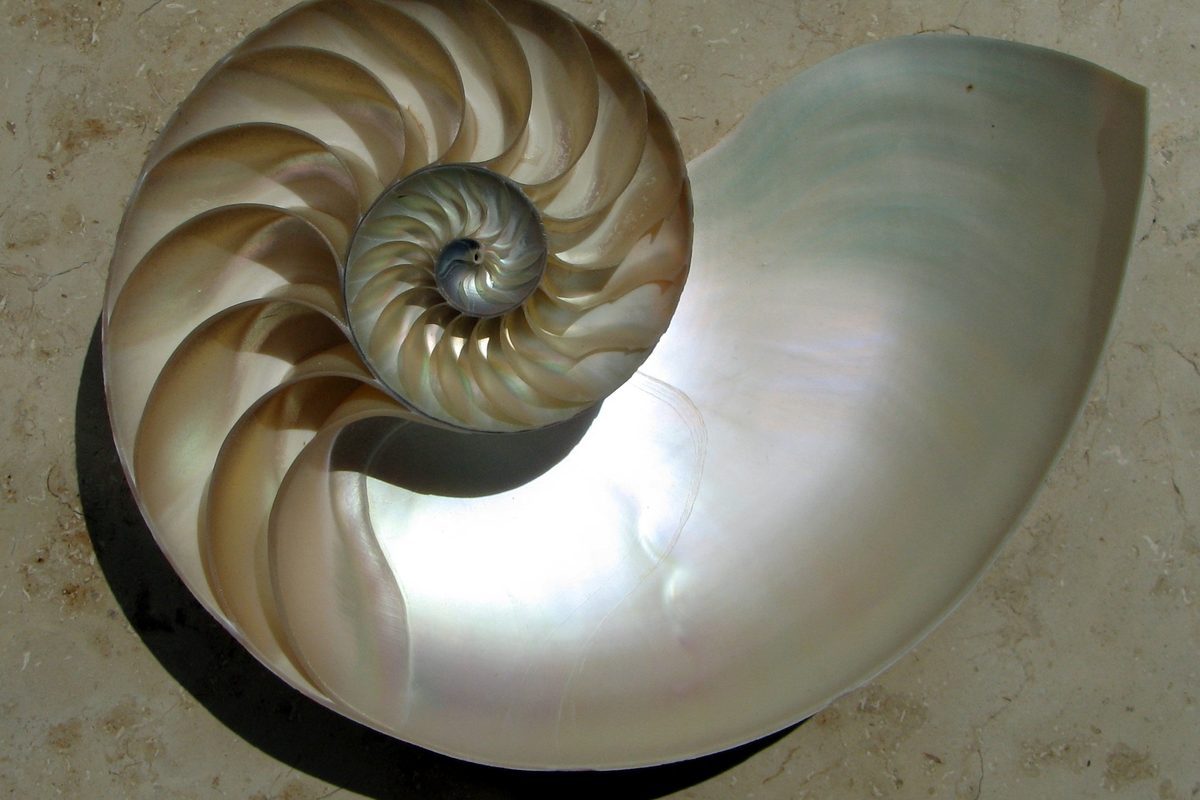
Once you start looking, the shape is hard to unsee. Fern fronds uncoil. Storms wheel. Galaxies wind their arms. None of this requires a sermon — only a small resistance against a popular postcard. The chambered nautilus is often held up as nature’s golden spiral. It does grow in a logarithmic spiral, but not in the golden ratio. The shell is elegant enough without being conscripted as a mascot. A symbol loses dignity when we decorate it with facts it does not own.
At Coventum the spiral is this older idea, drawn as a line: you can come back around without being trapped in the loop. You learn. You become someone slightly new. The path rises. That is the hero’s journey without the speech.
If this shape keeps catching your eye, it may simply be the line your inner voice keeps pointing to: a return that does not erase the road. We have written before, more briefly, about spirals in jewellery.
References
- Heritage Ireland, Office of Public Works. “Brú na Bóinne Visitor Centre: Newgrange, Knowth and Dowth.” https://heritageireland.ie/places-to-visit/bru-na-boinne-visitor-centre-newgrange-knowth-and-dowth/
- UNESCO World Heritage Centre. “Brú na Bóinne – Archaeological Ensemble of the Bend of the Boyne.” https://whc.unesco.org/en/list/659/
- Te Ara – The Encyclopedia of New Zealand. “The koru.” https://teara.govt.nz/en/photograph/2422/the-koru
- U.S. National Park Service. “Archeoastronomy in Stone.” https://www.nps.gov/articles/000/archeoastronomy-in-stone.htm
- Ivars Peterson. “Sea Shell Spirals.” Science News, 1 April 2005. https://www.sciencenews.org/article/sea-shell-spirals