How powerful can a single glance really be? In ancient times, it was believed that one look—if fueled by envy or anger—could unleash destructive energy. So strong was this belief that it gave birth to entire systems of protection. And at the heart of these systems? The infamous evil eye bead.
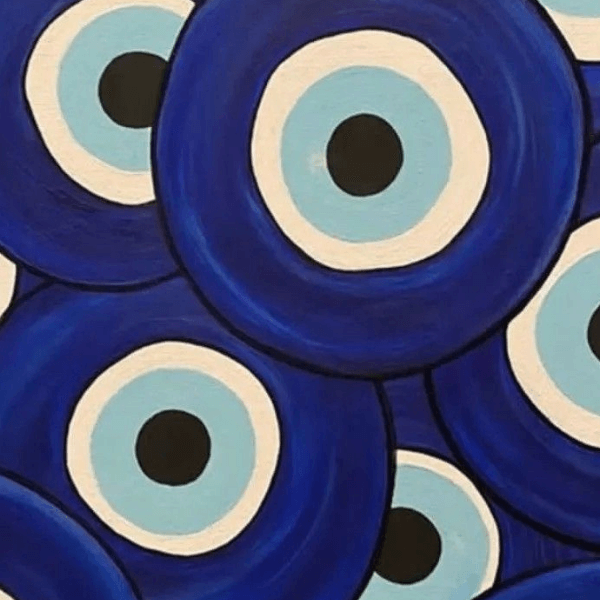
In Frederick Elworthy’s 1895 book The Evil Eye: The Origins and Practices of Superstitions, he writes:
“It is firmly believed by all ancients that some malignant influence darted from the eyes of envious or angry persons and so infected the air as to penetrate and corrupt the bodies of both living creatures and inanimate objects.”
This belief in the evil eye curse was so widespread that protective symbols became essential across many cultures. One of the oldest and most recognizable? The evil eye bead—or as it’s commonly known today, nazar boncuğu.
But here’s the twist:
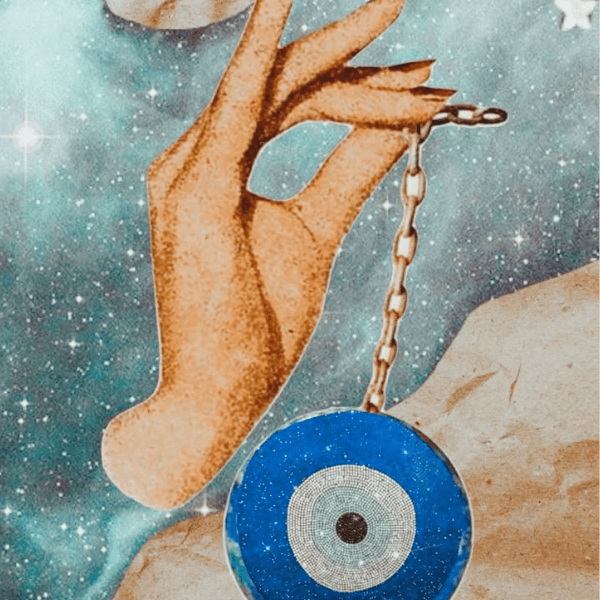
The evil eye bead is not simply a “good luck charm.” It’s not a happy talisman that beams love and light. In fact, its original function was to fight evil with evil. The bead is shaped like an eye, often a piercing blue, meant to stare back at malice with equal or greater force. The idea? To ward off bad energy by embodying a more menacing gaze.
This concept is echoed in ancient mythologies—like the Gorgon heads of Medusa, whose petrifying stare protected sacred spaces. Just like the Gorgons, the evil eye bead works on the principle that you protect yourself from darkness… by channeling a darker power.
A Brief History of the Evil Eye
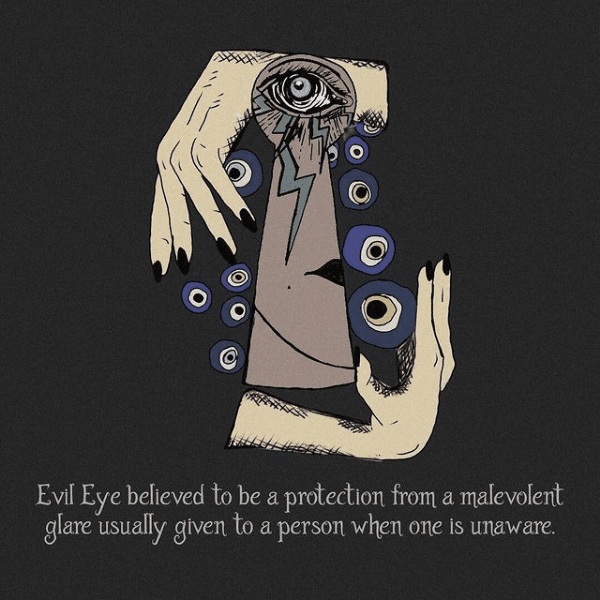
The first physical traces of the evil eye date back to 3300 BCE, found in the ruins of Ancient Ugarit (modern-day Syria). Excavations in Tell Brak unearthed alabaster carvings—geometric figures with inlaid eyes—suggesting the earliest form of the protective gaze.
But it doesn’t stop there. The evil eye appears in Irish folktales, Ancient Greek writings, and even religious texts like the Bible and the Qur’an—a rare crossover considering its pagan origins. Across time and geography, the fear of envious stares remained universal.

The Eye of Horus: Ancestral Guardian
Another powerful precursor to the evil eye is the Eye of Horus, also known as the “Moon Eye,” found across ancient Egypt. Horus, the falcon-headed sky god, was said to watch over everything with unwavering vigilance. His gaze became a symbol of justice, order, and divine protection.
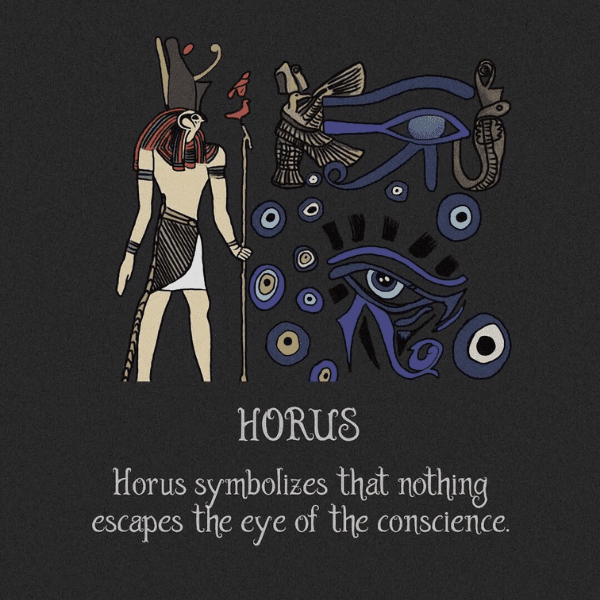
Over time, the Eye of Horus began to appear on tombs, ships, vases, and even the wrappings of mummies. Egyptians believed that an all-seeing eye—whether divine or threatening—could safeguard people and objects from harm. Again, we see the same pattern: warding off harm by invoking a powerful gaze.
What Does “Evil Eye” Mean in Different Cultures?
The concept of the evil eye—mal de ojo, mati, nazar, drishti, ayin ha’ra—exists across countless languages and belief systems. Despite the different names, the fear is the same: the destructive power of envy.
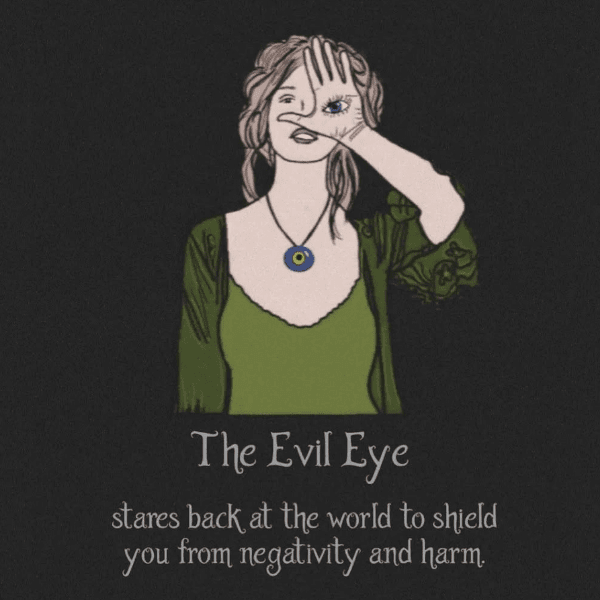
Greek philosopher Plutarch even attempted a scientific explanation in the 1st century. He believed the human eye emitted invisible rays, strong enough to harm infants, animals, or crops. Whether metaphor or early energy theory, the point remains: the gaze carries power.
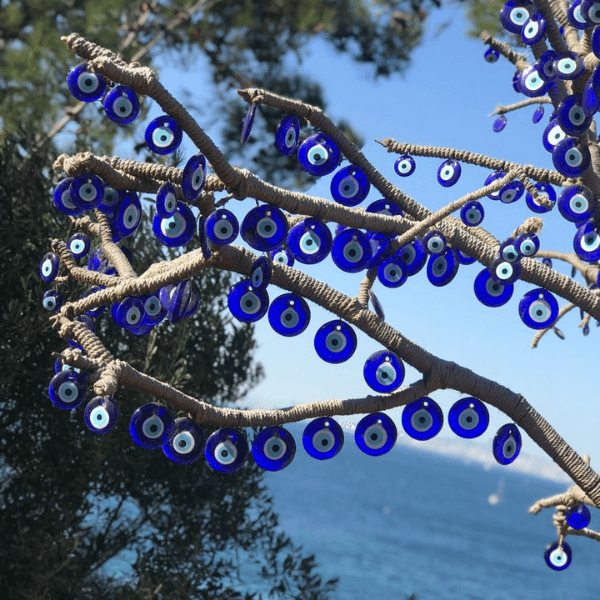
In Poland, one tale speaks of a man who gouged out his own eyes to protect his loved ones from the curse he carried. In Turkey, people still hang blue glass beads near entryways to ward off strangers’ jealousy. Even in modern life, we avoid “jinxing” good fortune by downplaying our success—an echo of ancient protection rituals.
So, Is the Evil Eye Bead a Blessing or a Curse?
In truth, it’s both. It protects—but not with gentleness. Its power lies in its ability to mirror malice, to reflect harm back to its source. It’s not asking for help from angels, but from darker forces that guard by intimidation.
Over time, we’ve softened its image. Today, the evil eye bead is often gifted at baby showers or worn as chic jewelry. But its ancient origin is far more complex—a symbol of shadow guarding light.
Just like Medusa’s head protected ancient temples, the nazar reminds us that sometimes, the fiercest guardians are the ones that stare danger straight in the face.