Jimmy Page bought his house. The Beatles put him on the cover of Sgt. Pepper. Ozzy called him “Mr.” But who exactly was Aleister Crowley, also known as the “Great Beast 666”? Accused of Satanism, drug abuse, and heresy, Crowley remains one of history’s most misunderstood mystics — and most influential occult figures.
The Man Behind the Myth
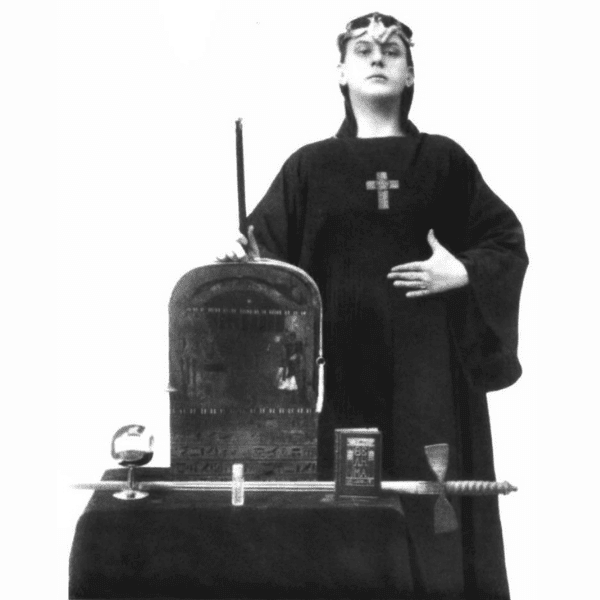
Crowley’s father was a traveling preacher whom he deeply admired. His mother, less affectionately, referred to him as “the Beast,” which Crowley fully embraced later in life. After his father’s death when Crowley was only 11, he began to question his Christian upbringing and rebelled against religious dogma — a moment that set him on a path of personal and spiritual exploration.
He attended Cambridge University, where he studied philosophy and English literature. However, his real passions were mountaineering, chess, poetry, and most notably, the occult. During his student years, Crowley became increasingly absorbed in mystical traditions and esoteric texts — and pursued a life of extreme experiences, both intellectually and physically.
Egypt, Aiwass, and The Birth of Thelema
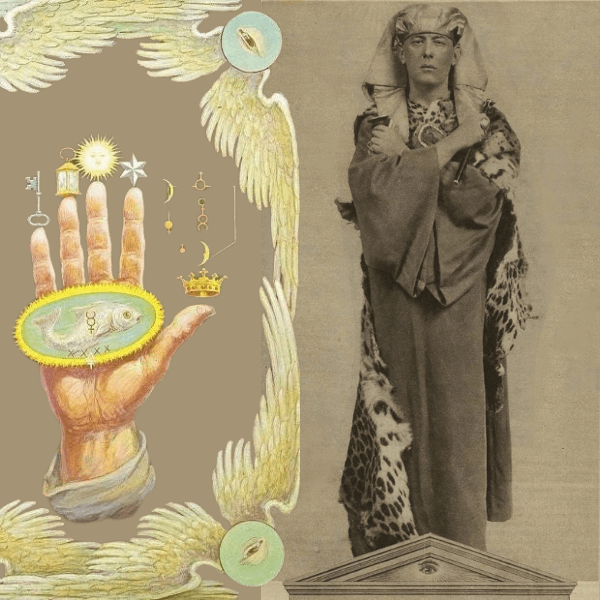
In 1904, during what was meant to be a leisurely honeymoon in Egypt, Aleister Crowley found himself swept into a supernatural chapter that would define his life’s work. While exploring the mystic traditions of the region, it wasn’t Crowley who first sensed something stirring — it was his wife Rose. Falling into a spontaneous trance, she whispered of a presence named Aiwass and guided him to a display in the Cairo museum marked with the number 666. There, they discovered the Stele of Revealing — an ancient artifact that would become the spiritual cornerstone of Thelema. Whether coincidence or cosmic choreography, the moment sparked what Crowley believed to be a transmission from beyond, forever altering the trajectory of his philosophy and fame.
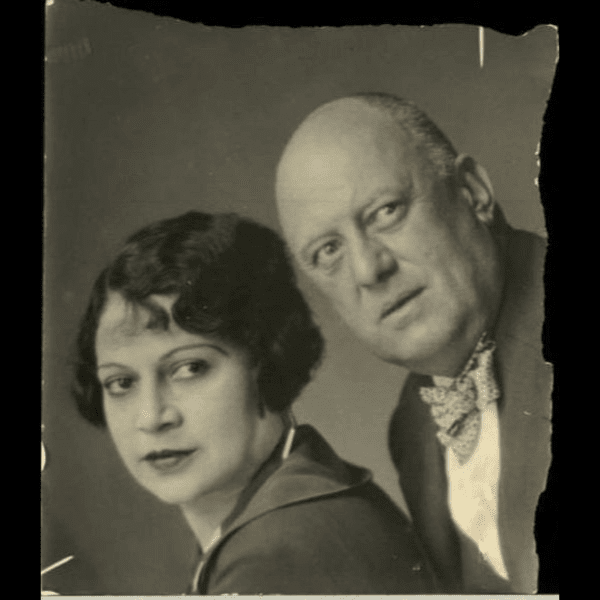
From April 8th to 10th, Crowley claimed to receive communications from an entity named Aiwass, who dictated what would become The Book of the Law — the foundational text of Thelema. Crowley did not write it in the traditional sense; he believed he transcribed it from another plane.
Thelema: A Philosophy, Not Satanism
So, what was Crowley’s philosophy? The core belief of Thelema is simple but profound: “Do what thou wilt shall be the whole of the Law.” This isn’t a license for reckless hedonism — it’s a call to discover your True Will, your soul’s purpose.
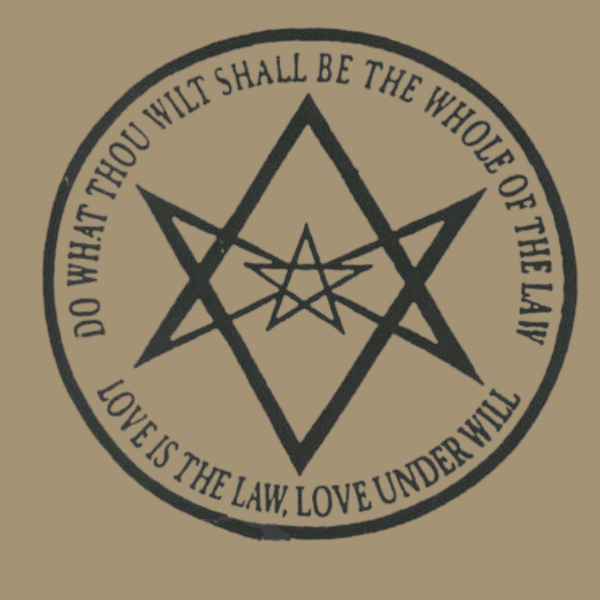
Two additional Thelemic principles offer even deeper insight:
- “Every man and every woman is a star.” Rooted in Platonic thought, this phrase reminds us that we are celestial beings — composed of both physical and spiritual matter.
- “Love is the law, love under will.” Love, when aligned with one’s higher purpose, becomes sacred. But love must never override the pursuit of the Great Work.
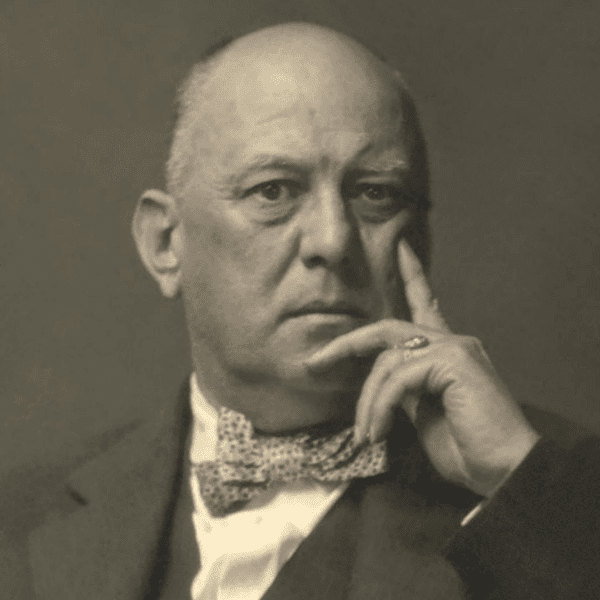
Crowley’s legacy, then, is not about devil worship or chaos — despite being branded as a Satanist by the tabloids of his time. The real reason for this label stemmed from his open exploration of taboo subjects, his rejection of traditional religion, and his use of provocative language and rituals that shocked Victorian sensibilities. While he embraced the title “The Beast” and practiced ceremonial magic that involved sexuality and altered states, Crowley himself did not advocate for evil but for radical personal freedom. At its core, his philosophy was about spiritual sovereignty, self-discovery, and the courage to face one’s inner darkness in pursuit of transformation.
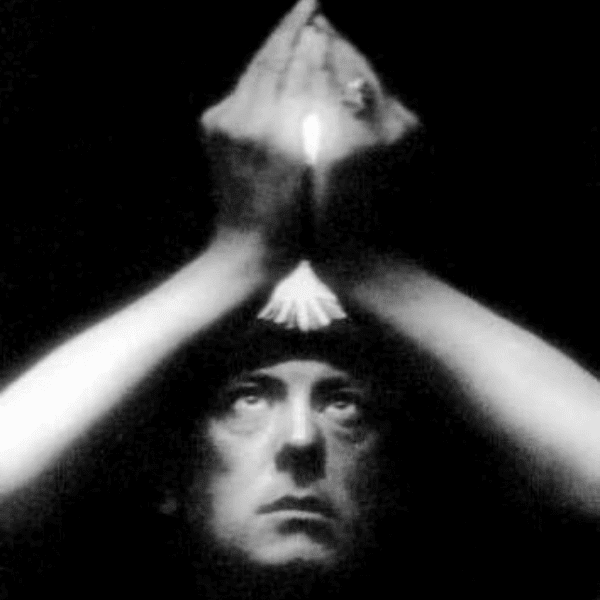
Rebellion in Ritual: Why Crowley Was Branded a Satanist
Crowley’s vision of divinity was radically different from traditional monotheism. He believed in a universal force — a divine presence that wasn’t meant to be worshipped from afar, but personally encountered and internalized. This belief was core to Thelema, his spiritual philosophy rooted in direct experience rather than dogma.
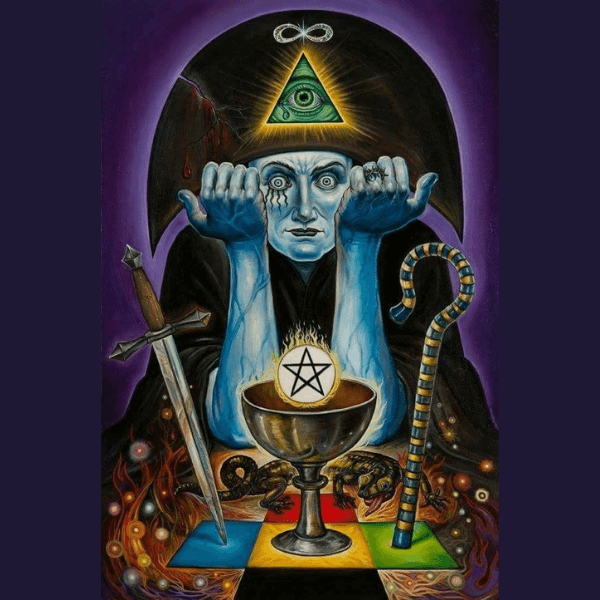
But it was precisely this rejection of conventional belief, paired with his embrace of ritual magic, open discussions about sex, and public drug use, that led many to label him a Satanist. Crowley was addicted to heroin — a drug commonly prescribed in his era — and while initially medicinal, it became yet another aspect of his mythos that fueled scandal. His refusal to adhere to Victorian moral codes, and his theatrical persona, made him a perfect villain in the eyes of a society that feared what it couldn’t categorize.
Influence on Pop Culture and Misconceptions
Crowley’s reputation as the wickedest man in the world was largely the result of tabloid hysteria and moral panic. Yes, he used drugs, practiced sexual magic, and rejected social norms — but so did half of 20th-century rock stars. In fact, Crowley influenced many of them.
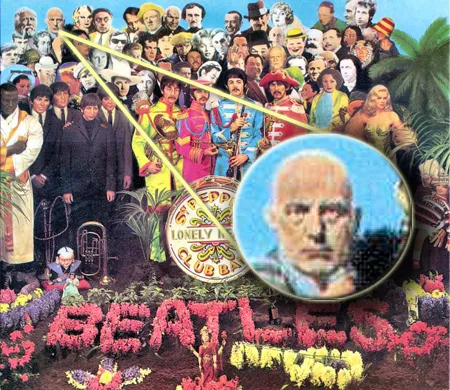
Jimmy Page, the legendary guitarist of Led Zeppelin, was captivated by Aleister Crowley’s defiance of social norms and his deep immersion in mystical symbolism. So fascinated was Page that he purchased Crowley’s former residence, Boleskine House, a manor steeped in occult history located on the shores of Loch Ness. This bold act solidified Page’s reputation as a modern mystic in his own right and linked the legacy of rock and ritual in the public imagination.
The Pentagram and Heptagram: Symbols Misunderstood
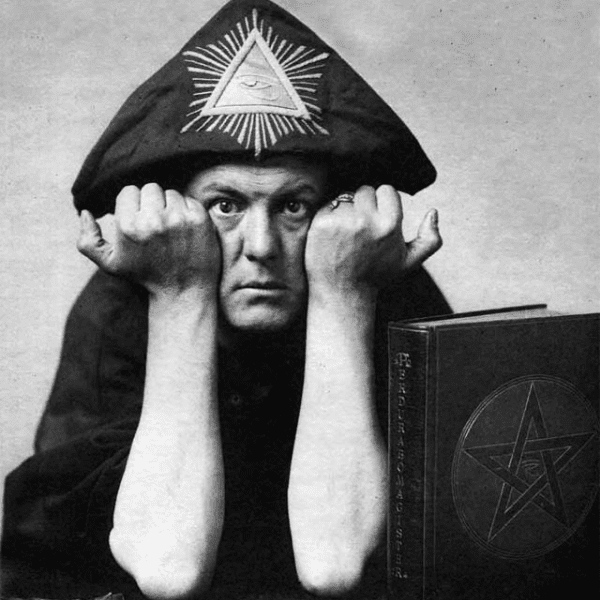
Much like Crowley himself, the symbols he employed — especially the pentagram and heptagram — have long been misunderstood. Today, these symbols are frequently miscast as dark or evil, yet they represent balance, sacred geometry, and spiritual intention.
- The Pentagram, often associated with protection, is deeply linked to Crowley’s rituals and to ancient magical traditions.
- The Heptagram or Seven-Pointed Star, also used in Thelemic practices, symbolizes the mystical union of spirit and matter — and the sacred number seven, often tied to feminine spiritual archetypes.

At Coventum, we honor these ancient symbols for what they truly are: powerful tools for spiritual connection, not emblems of fear.
Coventum’s designs offer modern-day seekers the chance to embody ancient symbols with meaning — like the Pentagram and Heptagram — in wearable forms that channel Crowley’s spirit of transformation, knowledge, and rebellion