In the tapestry of folklore and spiritual symbolism, the dream catcher emerges as a fascinating artifact. This woven charm, steeped in history and legend, serves as a guardian of sleep, a filter of dreams, and a symbol of protection. But beyond its beauty, many questions arise: What does a dreamcatcher symbolize? Where do dreamcatchers originate? Are dream catchers good or evil? Let’s dive into the lore and meaning behind this mystical object, exploring everything from traditional Native American dream catchers to modern macrame dream catchers and crystal-infused versions.
The Essence of a Dream Catcher
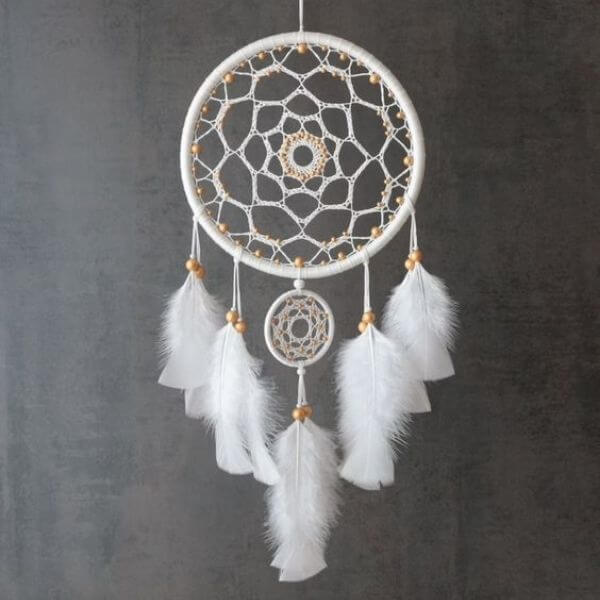
At its core, a dream catcher meaning is all about protection and comfort. Traditionally crafted by the Ojibwe people, it was believed to catch bad dreams in its web while allowing good dreams to pass through and slide down the feathers to the sleeper.
What do dreamcatchers do spiritually?
Spiritually, dream catchers are considered protectors of the subconscious, guiding us through sleep by filtering negative energies. Some even say they strengthen intuition and enhance inner clarity, making them more than just ornaments.
Is a dream catcher good luck?
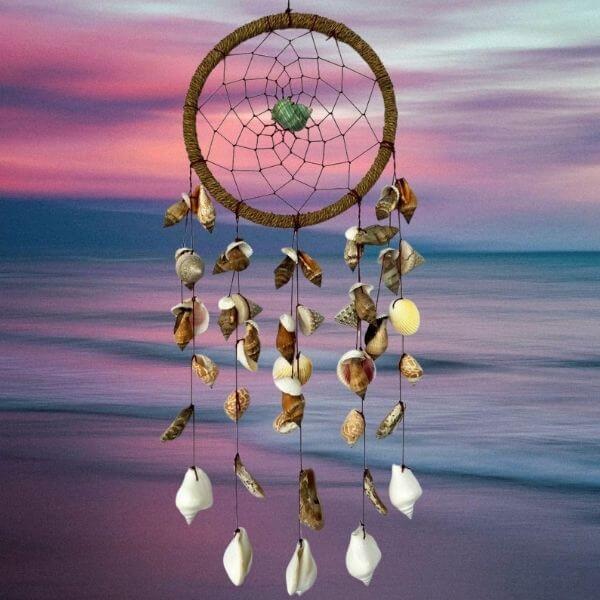
Yes—many cultures now regard dream catchers as good luck charms, associated with harmony, healing, and positive energy.
A Brief Dive into Dream Catcher History
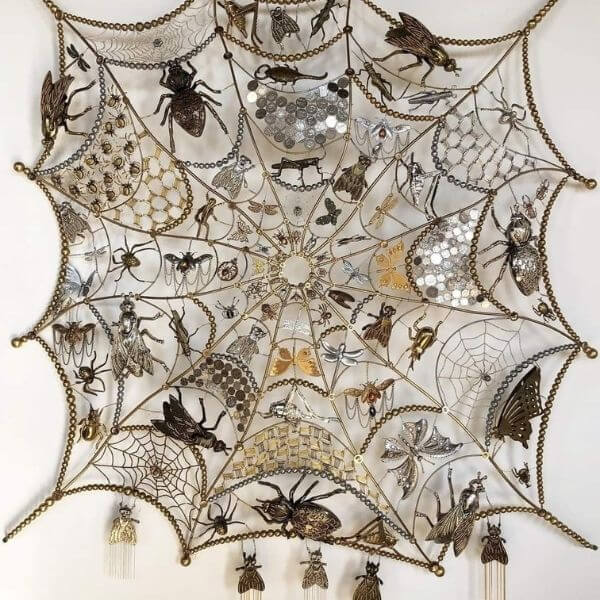
The story of the authentic dream catcher begins with the Ojibwe legend of Asibikaashi, the Spider Woman. She was a protector of children, weaving magical webs to shield them from harm and nightmares. As the tribe expanded and she could no longer protect everyone, mothers and grandmothers began weaving their own webs—small talismans made of willow hoops and sinew—to carry her power.
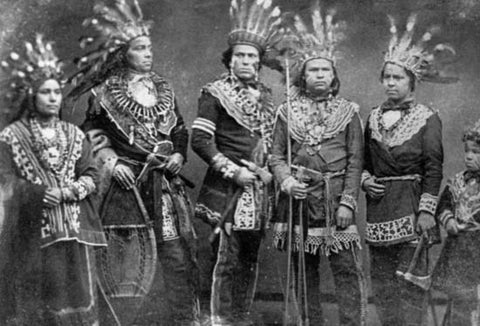
This tradition spread through intertribal exchange, eventually becoming a pan-Indigenous symbol and later a global icon of spirituality.
Where do dreamcatchers originate?
They originate from the Ojibwe (Chippewa) people of North America, though neighboring tribes later adopted and adapted the tradition.
Function: What Can a Dream Catcher Do?
So, what are the rules for dream catchers? Traditionally, they should be hung near the bed or crib, where morning light can strike them. Sunlight is said to purify the web, dissolving the trapped negative dreams.
Where not to hang a dreamcatcher?
Avoid hidden or dark places like closets, bathrooms, or cluttered corners. Without light and airflow, the dreamcatcher’s symbolic cleansing is weakened.
Does the shape of a dreamcatcher matter?
Yes. The classic hoop represents the circle of life and the sun’s path across the sky. Some modern dream catchers experiment with shapes—like hearts or stars—but the circle remains the most traditional.
Do dream catchers have to have feathers?
Traditionally, yes. Feathers symbolize breath, spirit, and the descent of good dreams to the sleeper. However, modern interpretations sometimes replace them with beads, crystals, or tassels, especially in decorative or macrame dream catchers.
Dream Catcher Colors & Variations
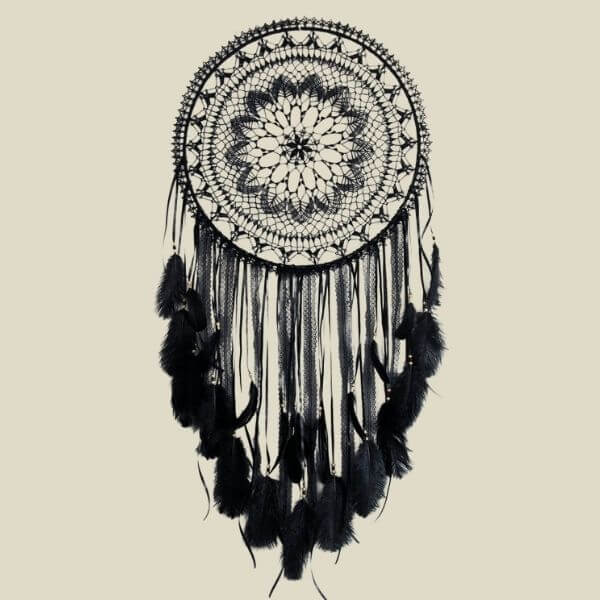
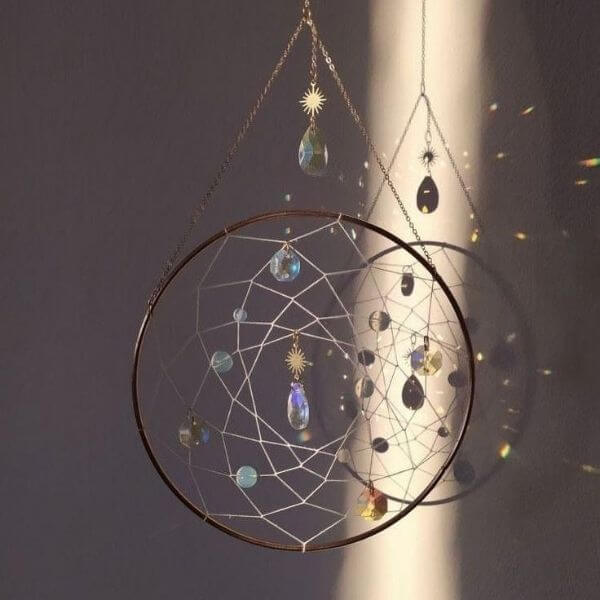
Today’s dream catchers come in endless forms—big dream catchers, handmade dream catchers, white dream catchers, black dream catchers, and even crystal dream catchers that incorporate healing stones. Each variation carries its own layer of symbolism.
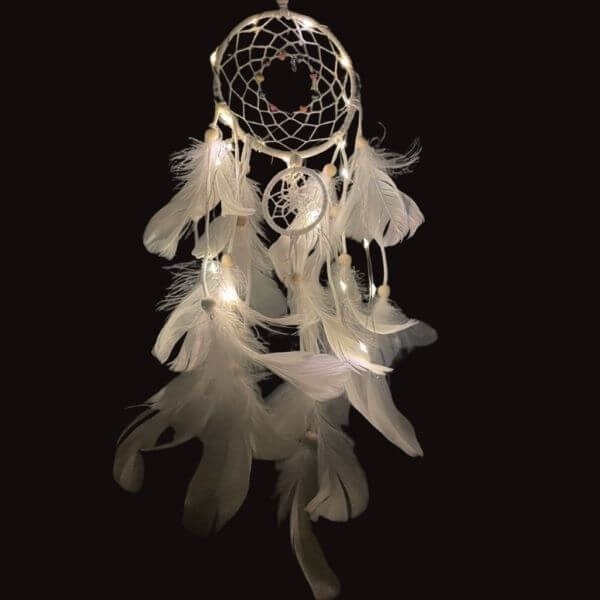
Which color dream catcher is best?
It depends on your intention:
- White dream catcher→ purity, clarity, peace.
- Black → protection, absorbing negativity.
- Pink → emotional healing, comfort.
- Blue → calmness, communication.
- Green → growth, harmony, renewal.
- Yellow → joy, confidence, optimism.
- Purple → spirituality, intuition.
Every hue adds a unique vibration to the dream catcher’s purpose, so the “best” is the one aligned with your needs.
Dream Catchers in Modern Life
Dream catchers have traveled far from their origins. Today you’ll find them everywhere—from art shops selling green witch art prints with dreamcatcher motifs to lifestyle stores like Barnes & Noble The Green Witch, which feature books and supplies inspired by nature magic. Modern adaptations include macrame dream catchers for boho interiors or crystal dream catchers that blend Indigenous symbolism with crystal healing.
Can you put a dreamcatcher in your living room?
Absolutely. While traditionally hung over the bed, placing one in a living room can invite harmony and ward off negativity in shared spaces.
Are dream catchers good or evil?
They are not evil. The authentic meaning of a dream catcher has always been rooted in protection, love, and well-being. Misinterpretations in pop culture sometimes cast them as “mystical” or “dark,” but historically, they’ve always symbolized safety and positive energy.
The Lifespan of a Dream Catcher
Like any spiritual tool, a dream catcher can “retire.” Torn webs or broken feathers often mean it has fulfilled its purpose. Many choose to return an old catcher to nature—burying or burning it respectfully—before replacing it with a new one.
Final Catch
From the ancient Native American dream catcher to the modern handmade dream catcher hanging in bedrooms around the world, this object’s magic endures. Whether crafted in simple willow and sinew or adorned with crystals, beads, and vibrant threads, it remains a bridge between the physical and spiritual realms.

So, what color should a dream catcher be? Do dream catchers have to have feathers? Can they really bring good luck? The answers all circle back to one truth: a dream catcher is only as powerful as the intention you weave into it. Whether small or big dream catcher, black or white, authentic or modern, it carries the age-old promise of protection, balance, and dreams worth keeping.