Today, Mayan cacao has slipped into mainstream wellness like an ancient secret rediscovered. It’s in cafés, meditation circles, and ceremonies around the world. People praise its antioxidants and heart-opening energy, but why are cacao ceremonies so popular now? What changed?
In a world obsessed with trends, yes, cacao has been swept into pop culture—but its roots are anything but hollow. This is a sacred drink with a lineage carved into myth, memory, and the collective. And today, people are beginning to sense what their ancestors once knew, more than ever.
Cacao carries a timeless mystique. And for the Mayan culture; it was a background cacao force, a sacred medicine and cosmic bridge that linked humans to the divine.
But to understand why cacao feels so “alive” today, we have to return to its origin story— its mythology, and the rituals that shaped it.
A Gift From the Gods
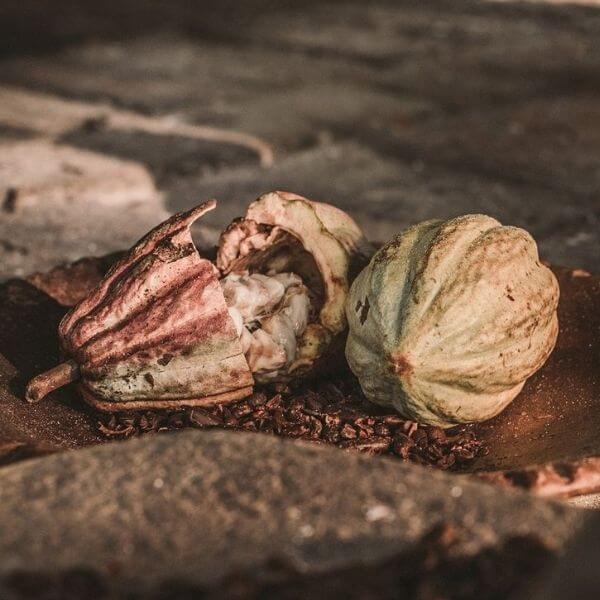
Cacao, known to the ancient world as Theobroma cacao—“food of the gods”—has a history in Mesoamerica that stretches across millennia. For the Mayan, it shaped religion, myth, trade, and daily life. It wasn’t just a beverage; it was currency, diplomacy, and ritual.
We tend to associate chocolate with sweetness today, but ancient Maya cacao was anything but sweet. Original Mayan chocolate is bitter, earthy, spicy, and frothy. A drink meant to awaken, not comfort.
The remarkable thing is that this gift of the gods wasn’t reserved for rulers alone. Classic-period vessels containing cacao residue show that its significance reached deep into the fabric of community and ceremony.
Cacao in the Mayan Imagination
The Maya saw the natural world as a living web of divine forces—nothing existed “just because.”
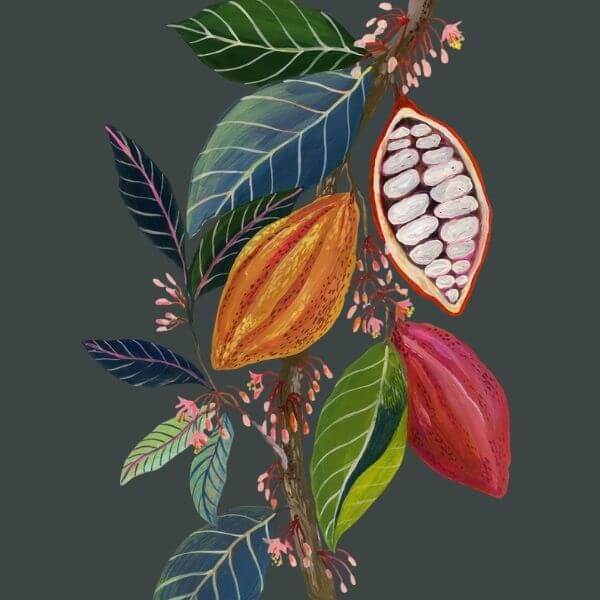
Every crop had a personality, a backstory, and often a temper. And cacao was practically a celebrity. Its shape and dark reddish tint made it look uncannily like a heart, which the Mayan took as a cosmic hint rather than a coincidence.
So cacao became the stand-in for everything the heart represents: blood, sacrifice, rebirth, life force, devotion, and the kind of ancestral memory that refuses to fade quietly. It was the go-to offering for gods, a messenger between worlds, and a reminder that transformation is never subtle. Cacao didn’t just nourish the body—it winked at the soul and said, “You know this story. You’ve lived it before.”
The Mythic Origins of Cacao
In the Maya creation epic, the Popol Vuh, cacao’s origins reach back before humanity existed.
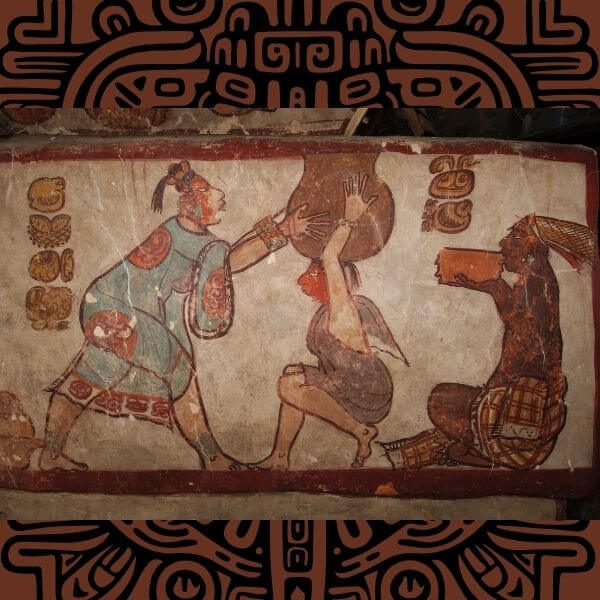
According to myth, the sacred foods of creation—maize, cacao, and others—were released from Paxil, the “Split Mountain,” when the divine storehouse of nourishment was opened.
Even more striking is the story of the Maize God, who was defeated and sacrificed by the Lords of the Underworld. From his body, cacao trees grew—life emerging directly from death. Later, the Hero Twins descended into the Underworld, overcame its rulers, and resurrected the Maize God. Only then could human life be formed, nourished by the sacred foods discovered by Chaak, the storm god, and K’awil, the bearer of lightning and abundance.
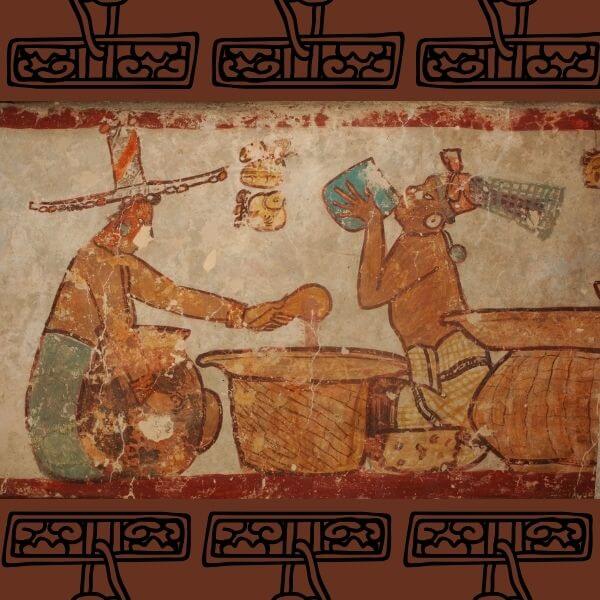
This is why cacao appears in so many myths as sprouting from skulls or blood, and why Maya priests sometimes mixed cacao with achiote to give it the appearance of blood: it was a reminder that life and sacrifice were eternally intertwined.
Cacao in Ritual Life
Imagine a process more sacred than a wedding, more theatrical than a festival, and more intentional than any modern self-care trend. A structured ceremony involving purification, offerings, prayer, and the communal drinking of a frothy cacao beverage—an act of communion with the divine. But what exactly was the Maya cacao ritual?
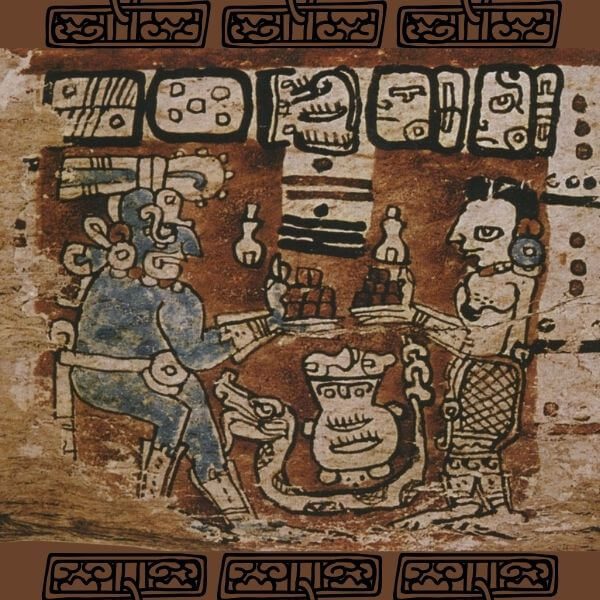
The drink was prepared by grinding cacao beans, adding water, maize, chiles, and sometimes achiote, then pouring it repeatedly between vessels to create the sacred foam.
This wasn’t “hot chocolate.” It was cosmic nourishment.
A Reimagined Ek Chuah Ceremony
Imagine this: Dawn spreads gold across a lush Mayan village. The air is thick with the scent of flowers, maize, and wet earth. The ritual space stands beside a sacred cacao tree—because the ceremony must unfold in the presence of the plant’s spirit.
Copal incense rises in white spirals. Villagers gather in vibrant woven garments. And the ceremony begins.
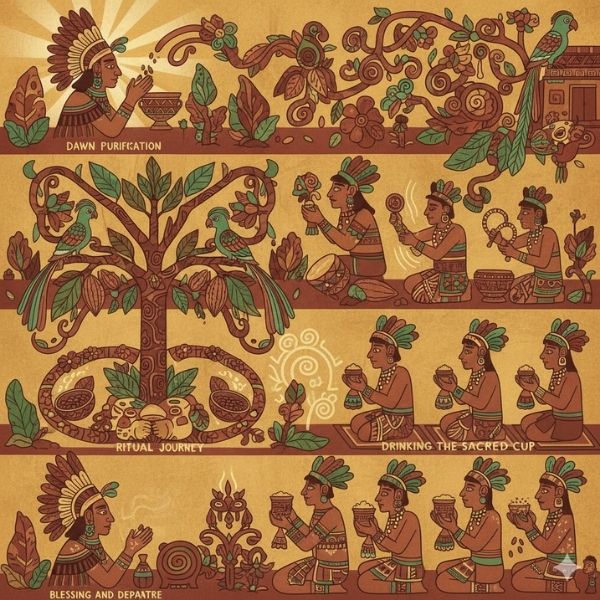
1. Purification
The shaman sprinkles water mixed with cacao and maize across the ground.
Participants cleanse their hands and faces, symbolically entering the protection of Ek Chuah.
2. Calling the God
Holding a carved effigy of the cacao deity, the shaman chants as drums pulse and rattles echo through the trees.
3. Offering the Fruit
Fresh cacao pods are cut open. Seeds are placed in a ceremonial bowl. Some are offered back to the earth; the rest shared in gratitude.
4. The Ritual Journey
The group circles the cacao tree with small pouches of beans. A few are dropped along the path—gifts for the unseen.
5. Drinking the Sacred Cup
The cacao drink is bitter, thick, and frothy—the same way it was prepared thousands of years ago. A cup of connection.
6. Blessing and Departure
The shaman dusts participants with cacao powder and whispers blessings. Everyone carries home a few beans for protection.
From Ancient Ritual to Global Trend
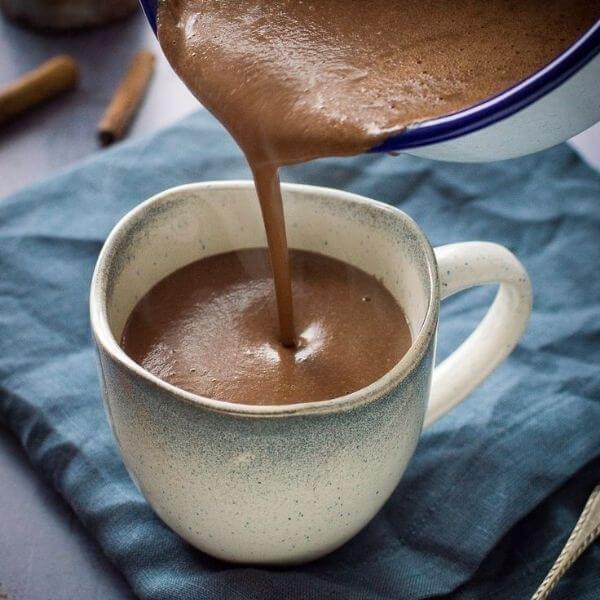
Mayan cacao ceremonies didn’t become a global phenomenon by accident. They speak to something people are craving now more than ever: a way to feel more open, more grounded, more themselves.
Ceremonial cacao gently wakens the heart, sharpens focus, enriches the senses, and offers a nutrient-rich lift without the chaos of harsher stimulants. Emotionally, it can help loosen old knots and feel honest with your body and your feelings.
For a deeper look at the potential physical, emotional, spiritual, and mental benefits of cacao, explore this blog on the topic.