Womanhood has always unfolded through thresholds—inner crossings of blood, birth, and wisdom that shape the feminine body, psyche, and sense of time.
In many cultures, masculinity is forged through an outward journey. The boy leaves home. He endures solitude, pain, hunger, and fear. He symbolically dies—and returns transformed. The Aboriginal walkabout, Native American vision quests, Turkic trials of becoming an Alp, Nordic tests of endurance… Or, if pop culture helps: remember the opening scene in 300—boys dropped into the wild, fight with a tiger. The pattern is universal. Because masculine initiation happens outside.
For women, the story has always been radically different. As with everything else.
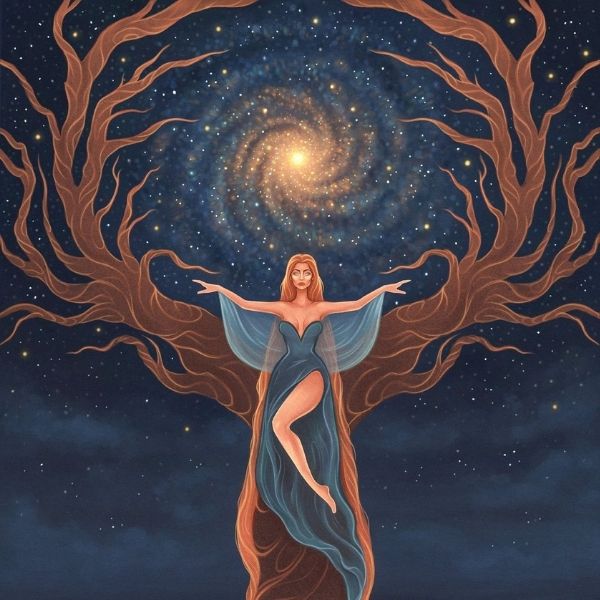
A woman does not seek initiation beyond herself. Her initiations are already written into her body—into her womb, her blood, her milk, and her relationship with time itself.
By definition, feminine energy is inward-moving. Symbolically, even in systems like tarot, masculine energy is shown in yellow: the color of the Sun, consciousness, clarity, logic, and the material world.
Feminine energy is mystery, darkness, night, the Moon. It governs the subconscious, the unseen, intuition, communication, and the ability to form bonds.
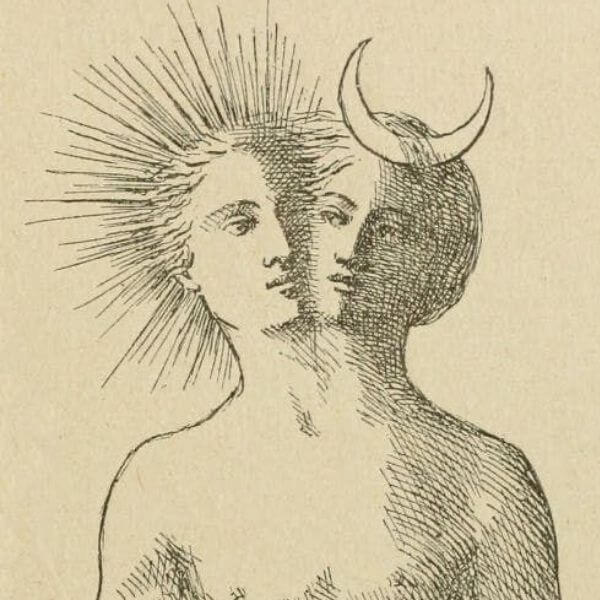
This is why women’s initiations do not unfold in the material world. They happen through seeing what cannot be seen, through weaving connections, through inner trials rather than external conquests.
Not with matter—but with the self.
Cyclical Wisdom, Not Linear Time
The female body works through repeating initiations. This is why feminine wisdom is not linear—it is cyclical. Every major biological threshold is also a psycho-spiritual gate.
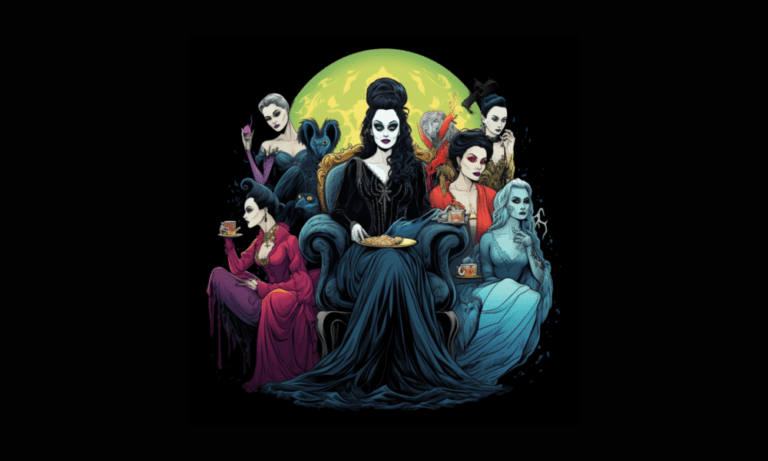
For thousands of years, these thresholds have been symbolized through the Triple Goddess, most famously embodied by Hecate—the goddess of crossroads, thresholds, and transitions.
She is called dark not because she is evil, but because she represents the purest form of feminine mystery.
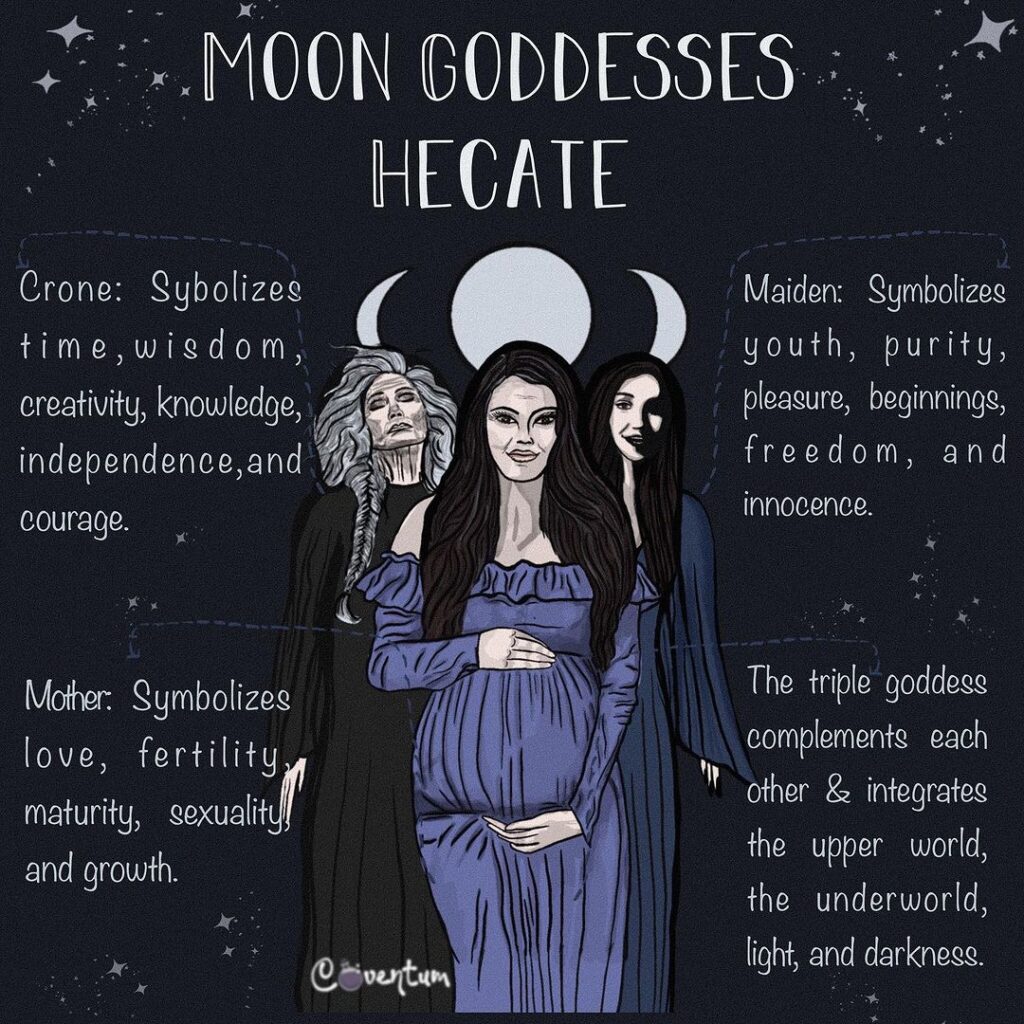
And it is no coincidence that she is also the goddess of thresholds: every initiation a woman passes through is an internal crossing, and each of the three feminine phases belongs to Hecate. Wherever there is a feminine threshold, Hecate stands.
🌛 Waxing Moon — Maiden
🌝 Full Moon — Mother
🌜 Waning Moon — Crone
Even if capitalism and patriarchy have trained us to forget these rites, the body does not forget.
It continues to initiate women—quietly, relentlessly, faithfully.
Menarche: The First Threshold
Menarche is not merely a first period. It is the first initiation.
The waxing moon becomes full. The body signals readiness—to create, to nurture, to bring something into the world. Blood awakens consciousness. The menstrual cycle synchronizes the body with the Moon.
Time is no longer linear; it becomes circular. Womanhood begins to expand.
In many ancient cultures, a girl experiencing her first menstruation was never left alone. She was held—literally and symbolically—by women. Prayers were spoken. Ceremonies were performed. Women from different life phases gathered around her, embodying the very essence of feminine connection and communication.
But as the world modernized—and masculinized—this threshold was recast as something shameful.
Girls were taught to hide. To be silent and to feel embarrassed.
Worse still, in many families, this moment was marked by violence. Both my maternal and paternal grandmothers told me the same story: when they told their mothers they had started menstruating, they were slapped. Most likely, their mothers had been slapped too. Because bleeding was seen as something shocking, disgraceful—something that required a slap to “bring you back to yourself.”
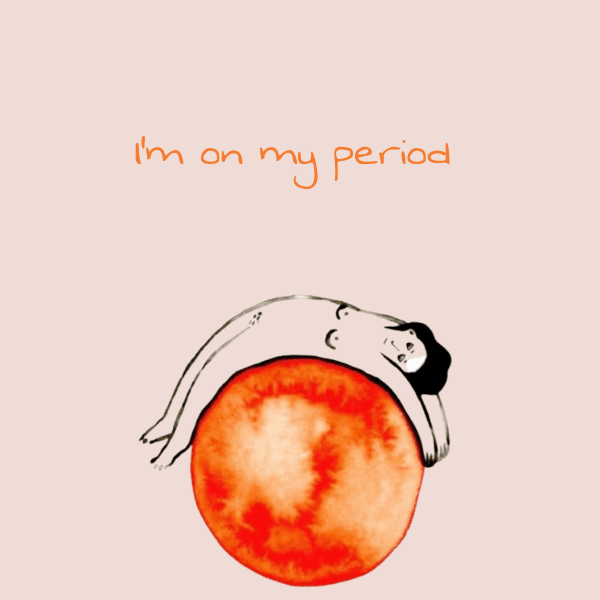
What should have been celebrated was turned into punishment. And tragically, women themselves carried this belief forward, generation after generation.
My grandmothers are the ones who broke that cycle. When I got my first period, they bought me a cake and we celebrated it like it was my birthday. For that, I am endlessly grateful—to the women and men in my family alike.
But not every woman is this lucky. And even those who are often understand what this first threshold truly meant much later in life—if they understand it at all.
Birth & the Mother Archetype
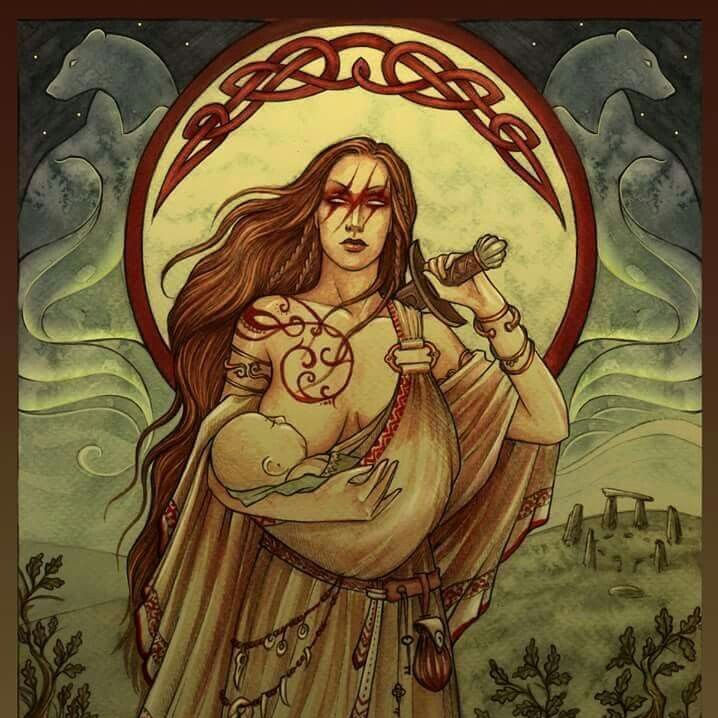
Birth may be the deepest initiation of the human experience. It teaches surrender to bodily wisdom, becoming a doorway between worlds and the raw power of the feminine.
Yet one does not need to physically give birth to enter the Mother archetype. Not every woman must become a biological mother.
This initiation is about learning how to nurture—yourself, your work, your creations, your life.
It is about growing roots. Feeding what you love. Holding space.
In many ancient cultures, birth was treated as a sacred crossing. A woman who gave birth was considered to have “returned from another world.” She was kept in silence, purified through ceremony, and honored—because she had brought life into existence.
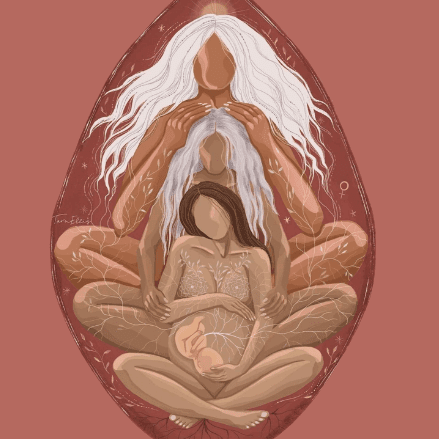
Modern society, however, speeds this process up. Controls and medicalizes it. But historically, birth belonged to women.
Midwifery was women’s knowledge—passed down through generations of female ancestors.
But with the rise of modern medicine, midwives were labeled witches, crones, superstitious relics.
Birth was handed over to male doctors—because women were barred from medical education for centuries.
Read Now: “Witches and the Systematic Exorcism of Women from Medicine“
Menopause: When Blood Withdraws
When blood no longer flows outward, wisdom turns inward.
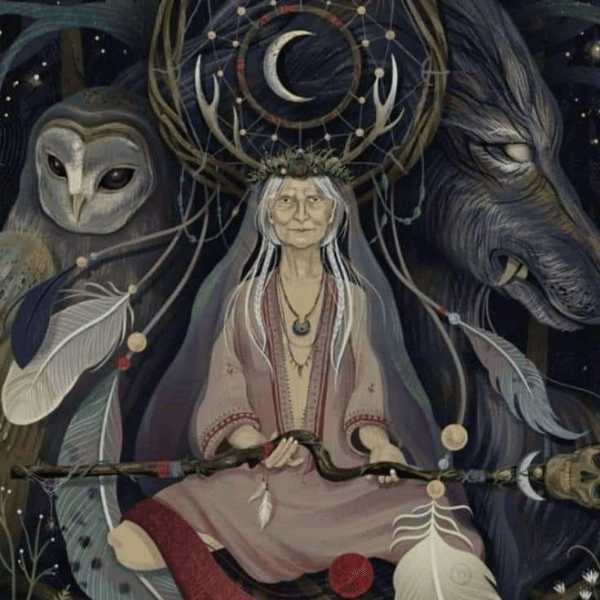
At this stage, the woman who once served society becomes a woman who serves feminine wisdom itself.
In Mayan cosmology, the age of the shaman is 52—a direct acknowledgment that this life phase carries profound spiritual authority. Women in this phase were naturally seen as wise women, healers, seers.
And shamanism was never merely a role—it was a state of being. And that state was, at its core, profoundly feminine. Because the shaman’s power was understood to arise from qualities already inherent in the feminine body: the ability to cross thresholds, to move between worlds, to hold life and death within the same vessel.
Women did not need to learn this. They lived it.
Men, however, had to symbolically step out of masculinity to access it.
The Natural Shamanic Initiation
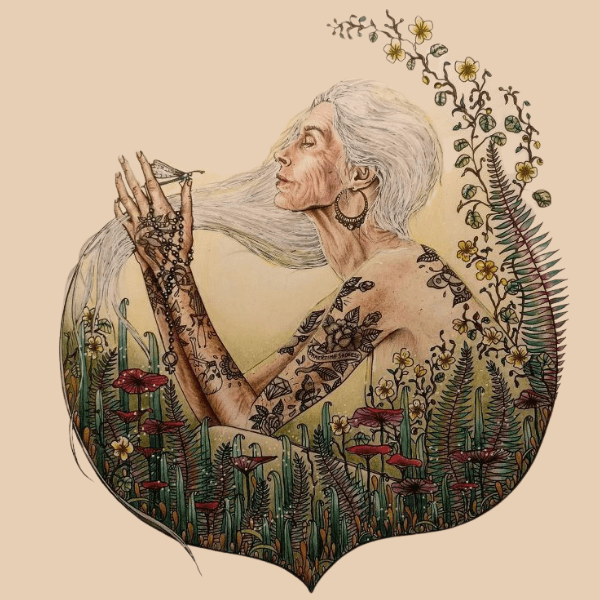
In Siberian shamanism, for example, male shamans who wished to reach the deepest trance states were believed to be unable to do so through masculine identity alone. They adopted feminine garments, gestures, and sometimes even names, because the spirit world was considered receptive to feminine channels of consciousness.
The underlying belief was clear: the closer one moved toward feminine consciousness, the closer one came to the threshold of the unseen.
This is why menopause was never seen as loss in ancient cultures. It was seen as arrival.
The woman who no longer menstruated was no longer bound to reproductive rhythms. She was free to hold collective wisdom, to guide, to heal, to see beyond the immediate.
Where modern culture diagnoses menopause as deficiency, ancient cultures recognized it as completion. Not the end of womanhood—but the moment it fully crystallized.
And even today, modern medicine still approaches the female body with far less curiosity than the male one. Research into menstruation, menopause, and the uterus is surprisingly recent, while male bodies have long been treated as the universal reference.
We owe modern medicine a great deal—but it does not yet look at the female body the way ancient ancestors did: as a source of intelligence, not a problem. And perhaps there is still much we have forgotten to learn there.