Before it became a cute backdrop for holiday flirtation, mistletoe was pure pagan magic. Today we hang it over doorways and pretend it’s just decoration, but its roots — or rather, its lack of roots — tell a far stranger story.

This evergreen plant has carried centuries of symbolism: peace, protection, fertility, blessings, and light in the deepest dark of winter. If you’ve ever wondered why we kiss beneath it… well, the answer comes straight from the old gods.
A Plant Suspended Between Worlds
Long before Christianity adopted mistletoe into winter festivities, Europeans saw it as one of the most sacred plants on earth. The Celts, Druids, and Norse pagans all revered it — not because it tasted good (cuz it’s poisonous), but because of where and how it grows.

Mistletoe anchors itself high in the branches of ancient oaks and apple trees, floating above the earth with no roots in the ground. Ancient people couldn’t make sense of a plant that never touched soil yet stayed green all winter. So they believed it lived between worlds — neither fully of the earth nor the sky.
In a time when everything symbolic mattered, this oddity became powerful.
To pagans, it symbolized life suspended in darkness, a promise that green would return even in the dead of winter. This made it a natural talisman for protection, healing, luck, and all the energies we now file under mistletoe symbolism.
The Sacred Harvest: Druids and the Golden Sickle
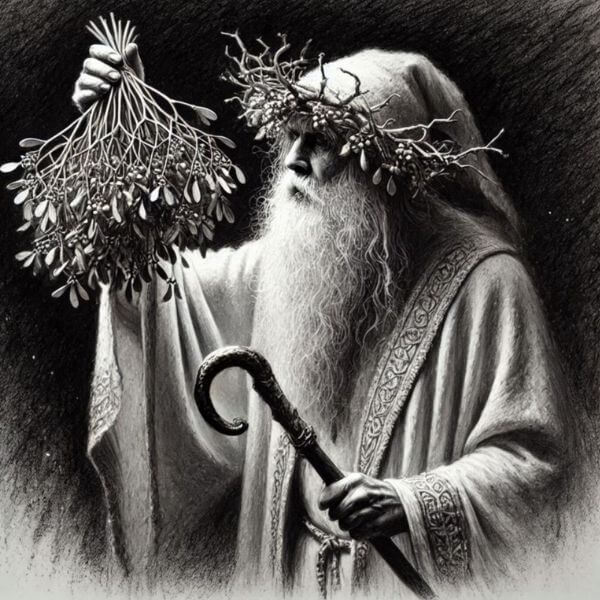
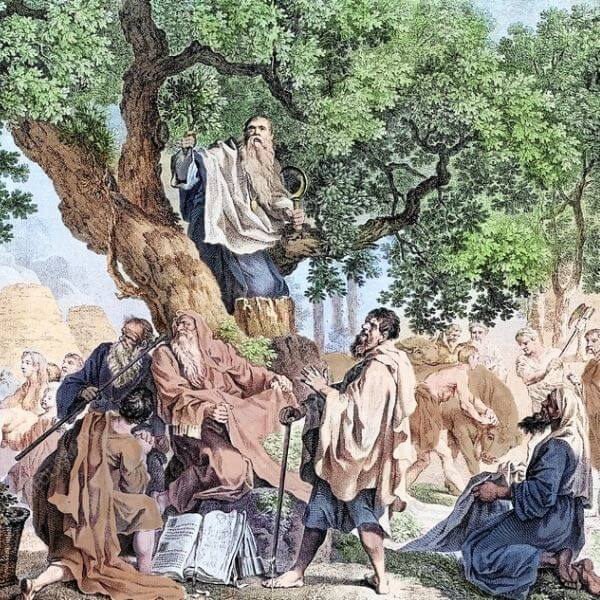
According to early writings (even Pliny mentions this), Druids cut mistletoe with a golden sickle during the winter solstice — the moment the sun “returns” after the longest night. The plant was believed to capture the sun’s spirit at the darkest time of year.
They used it in:
- fertility rites
- healing rituals
- peace offerings between enemies
Which already hints at this plant’s role in love, reconciliation, and the mistletoe symbolism meaning we know today.
The True Origin of the Kiss
But the most famous story behind the mistletoe — the one tied directly to the “kiss under mistletoe origin”— comes from Norse mythology.
Baldr, the radiant god of light, was prophesied to die. His mother Frigg asked every plant and creature to swear never to harm him. Except one. She overlooked the quiet, rootless mistletoe. Loki — agent of chaos, connoisseur of loopholes. He crafted a weapon from mistletoe, and Baldr was killed by a dart made of the very plant Frigg had forgotten.

After Baldr’s death, Frigg’s grief transformed into ritual. Realizing that mistletoe had become an instrument of tragedy through neglect, she reversed its meaning entirely. From that moment on, mistletoe would no longer draw blood — it would seal peace.
She declared that anyone who passed beneath it would receive a kiss, not as romance, but as a gesture of reconciliation, forgiveness, and protection. In a world governed by honor and oaths, a kiss under mistletoe was a sacred truce.
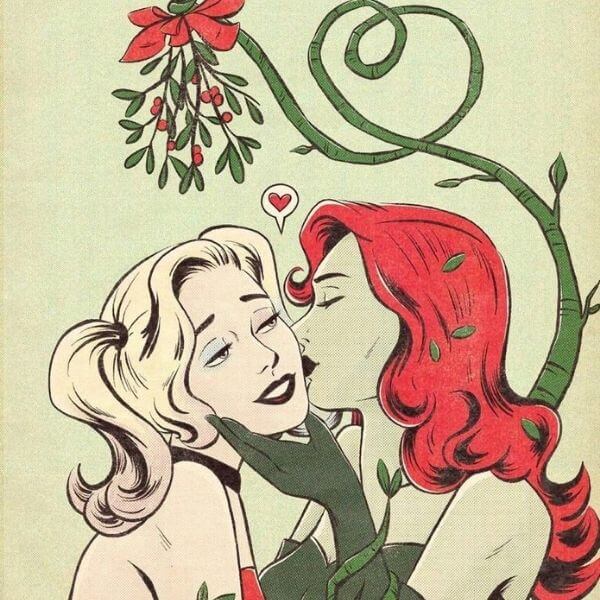
This is where the tradition truly begins. Not as flirtation, but as a ritual of restored harmony — a promise that violence would not follow where mistletoe hung.
And yes: every kiss under the mistletoe is technically a Norse spell.
The Magic That Refused to Fade
When Christianity expanded into northern Europe, it absorbed winter traditions the same way it absorbed everything else — by repackaging them. Mistletoe, like Yule logs and solstice feasts, found its way into seasonal celebrations.
But priests were… let’s say unenthusiastic. They banned mistletoe from churches for centuries because its symbolism was too pagan, too bodily, too magical.
People used it anyway. Not because they were rebellious — but because some symbols live deeper than doctrine. Old traditions don’t survive through permission; they survive through collective memory. Mistletoe was already embedded in the human psyche as a marker of peace, fertility, and protection. It belonged not to religion, but to instinct.
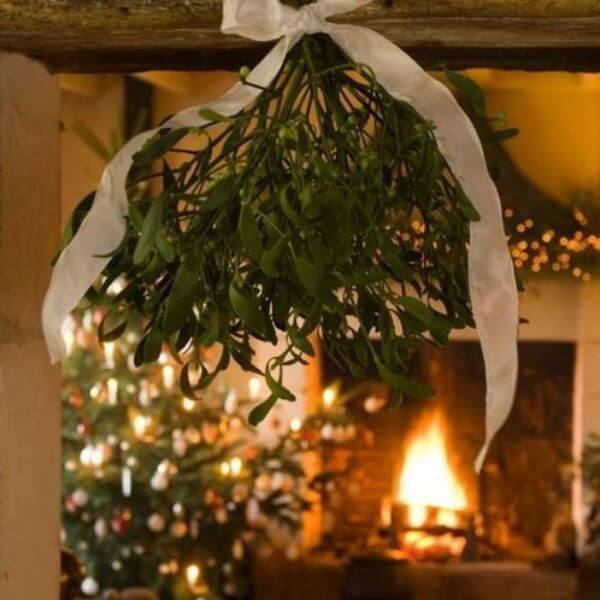
From Threshold Magic to Victorian Ritual
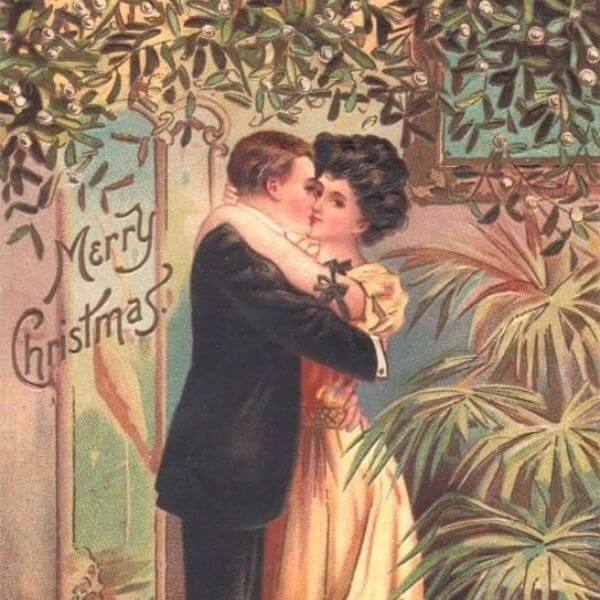
In Victorian England, mistletoe became a domestic ritual, especially among working-class households and servants. Hung in communal spaces during Christmas gatherings, it offered a rare moment of sanctioned intimacy in an otherwise rigid social world.
A kiss under the mistletoe was playful — but it was also symbolic. Each kiss was believed to bring luck, harmony, and blessings for the coming year. Refusing a kiss wasn’t merely impolite; it was considered an omen of bad fortune.
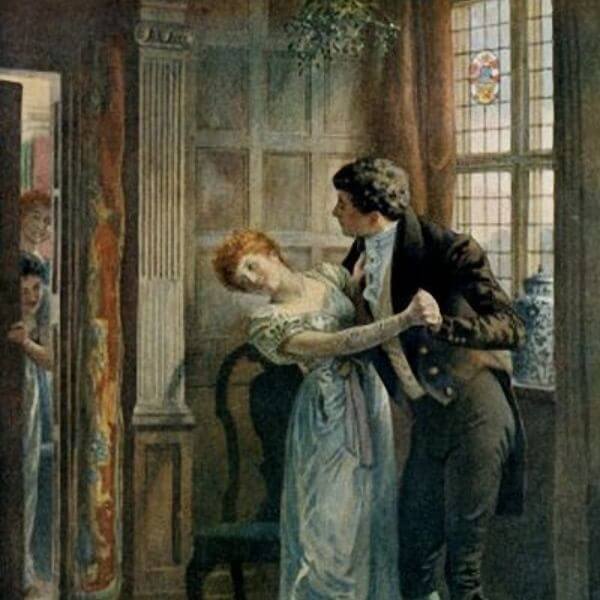
The Victorians loved symbolism, coded gestures, and rituals disguised as romance. It fit perfectly. They softened its pagan edge, wrapped it in etiquette and seasonal charm — but they didn’t erase its power. They preserved it.
So… What Does Mistletoe Mean Spiritually?
Spiritually, this heavenly plant is still what it always was:
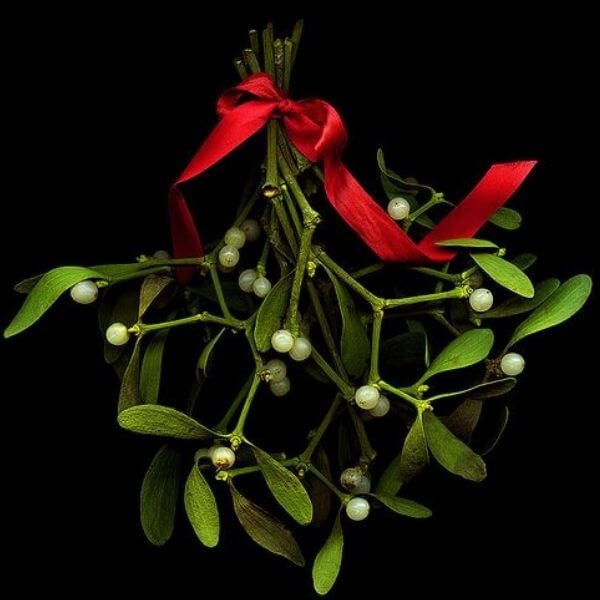
- A symbol of peace (it was once hung over doorways to declare truce)
- A symbol of protection (Druids used it to guard households)
- A symbol of love and fertility (hello, Frigg)
- A symbol of hope in winter’s darkness
It is a symbol of love — but not just romance. It’s a symbol of reconciliation, healing, second chances, and the return of light.
A Kiss as an Ancient Spell
Modern holiday décor has softened the lore, but the symbolism still lingers. Every mistletoe hanging in a doorway carries the echo of solstice rituals, goddess blessings, and cosmic truces.

So the next time someone pulls you under the mistletoe, remember: You’re not just sharing a festive kiss — you’re stepping into a 2,000-year-old ritual of love, peace, and protection, whispered from the darkest nights of winter.
A kiss beneath the mistletoe is, and always has been, a tiny spell for light in the dark.