In the early decades of the nineteenth century, in Britain and the United States, public hangings were about more than punishing criminals—they became social spectacles. One stark example: in Clark County in 1890, the execution of Edward Gallagher drew audiences in what officials dubbed an “execution holiday”! Two hundred tickets were sold; hundreds more queued outside; families brought picnics, children were lifted onto shoulders, all to watch the drop.
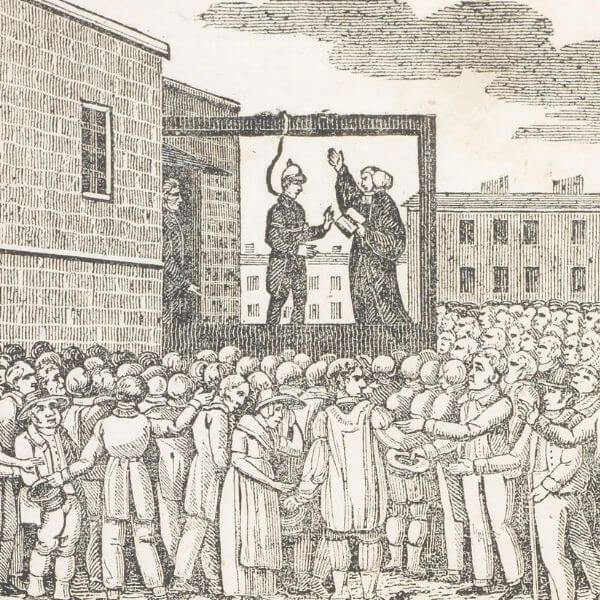
The mood was so festive that one Wall Street-style quip might have gone: if they’d snapped selfies at the gallows, they’d perhaps have framed and hung them at home.
Yet the crowd’s attention was not always fixed on the condemned man. Instead, much of it shifted after the last gasp, to a departing object of spectacle: the rope.
Rope & Ritual: Deadly Fashion
In the Victorian era, the hangman’s rope wasn’t merely execution gear—it became a kind of talisman. From the Middle Ages onward, in both Europe and America, spectators chased after the rope used for public executions.
One 1882 report claimed that the noose “in various times and countries” was believed to possess “extraordinary occult and useful properties”. People thought that wrapping it around their heads would cure headaches or fevers; gamblers in particular were convinced that owning a fragment of such a rope would bring them luck.
Executioners recognised the drift of business, too: they would cut the rope into fragments, mark pieces with coloured threads, and sell them as “good-luck charms” to the crowd. Hence, the Hangman’s Locket was born.
Hangman’s Locket
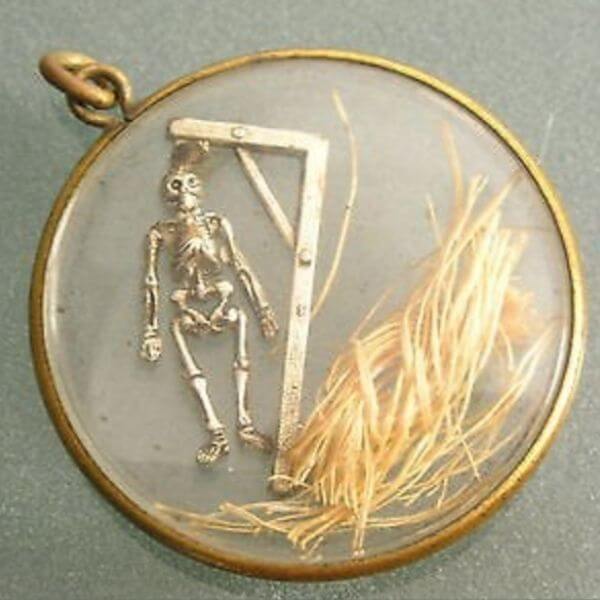
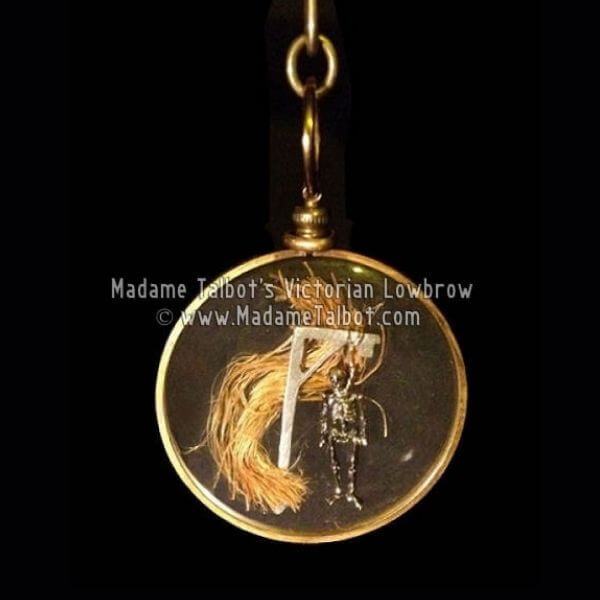
Perhaps the most morbid twist of all: the transformation of rope fragments into jewellery. These so-called “Hangman’s Lockets” were transparent glass medallions, inside which a tiny gallows and skeleton figure lay, often containing a few fibres of the actual rope used that day.
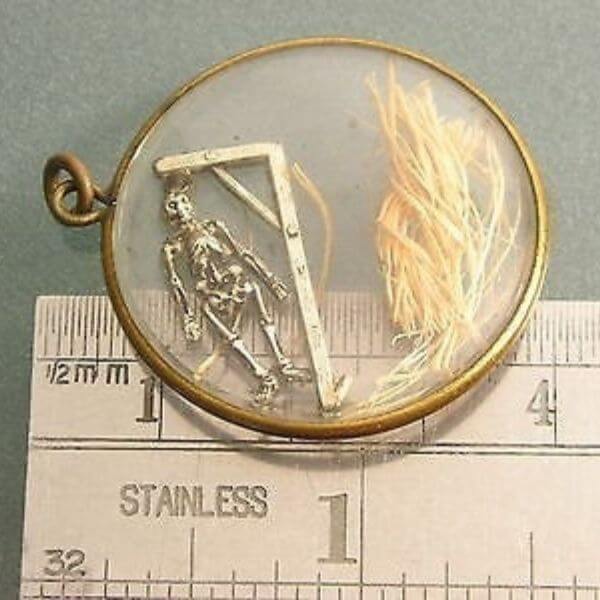
According to contemporary sources, in Britain before public executions were banned in 1868, spectators could buy these at the scene—and believed them to be lucky charms, especially for throat and neck ailments.
In a sense they became conversation-pieces: “What’s that rope-piece around your neck?” one might ask. In modern parlance: a very dark statement necklace.
Limited-Edition Talismans & The Crowds Who Chased Them
Another illustration of morbid collecting: after the 1890 Gallagher hanging, parts of the rope were snapped up by the departing crowd. Reports describe the scene: once the trapdoor dropped, people scrambled to collect fragments of the rope from the scaffold area. Newspapers decried the practice as “shameful” and argued that public executions should be abolished. And indeed, in England, 1868 marked the end of public hangings.
For the crowd, however, a piece of rope was not just a souvenir—it was a keepsake of death, of spectacle, and of luck.
Victorian Dark Humour
These stories reveal much about the Victorian relationship with death. On one hand, executions became communal outings—picnics in the square, curious gawkers, children on shoulders. On the other hand, superstition wove itself into the very cord of punishment: rope fragments became cures, charms, jewellery.
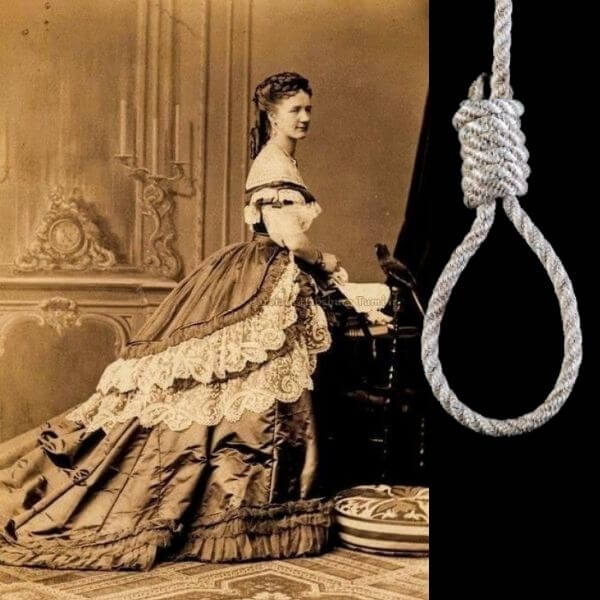
Maybe this was the Victorians’ way of coping with their fear of mortality. The odd thrill we feel today when we binge a true-crime podcast or watch a horror series is not entirely dissimilar to what nineteenth-century spectators felt as they plucked fibres from the gallows rope.
If one day you wander into a London museum and spot an old “Hangman’s Locket”, smile. That little fragment of rope may once have rested in a gambler’s pocket, “cured” someone’s throat, or been stealthily plucked from a scaffold by a crowd in celebration. The Victorians remind us this: fashion and luck sometimes take forms so strange we can hardly imagine them—especially when they’re dressed in the trappings of death.